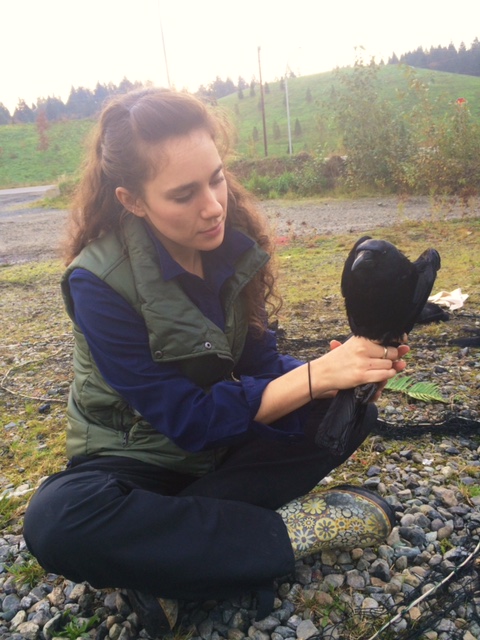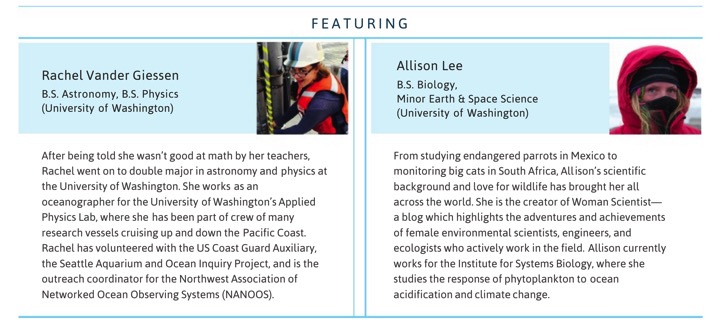
woman scientist

in the field

Page 4 of 9

Bidding High for the Okavango Delta

The dream started when I attended a National Geographic Live! event at Benaroya Hall in Seattle, WA on November 2, 2015.  South African conservationist, Steve Boyes, and Multi-disciplinary artist, Jer Thorp, led a “live-data” expedition across Botswana’s Okavango Delta in 2014 and presented the results with Seattle.

The team of baYei River Bushmen, scientists, artists, writers, photographers, bloggers, naturalists and engineers traveled from the Okavango Delta river source waters in Angola all the way through to Botswana documenting the numerous biodiversity they encountered, sharing it in real-time with thousands of followers. They recounted tales of discovery and danger, captivating the audience and stirring my wanderlust.
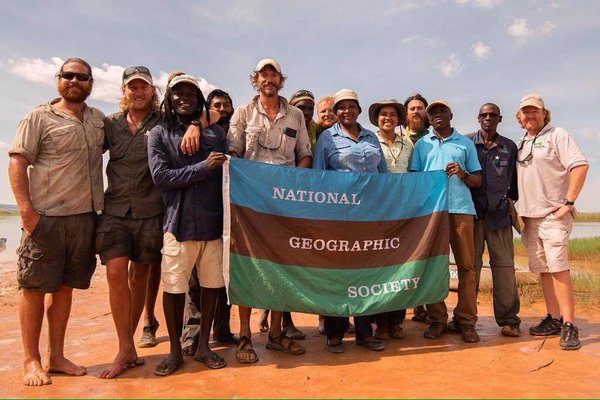
Photo Credit: National Geographic team

Fast forward a couple of months: January 7, 2016. A friend, Kirsten Gardner, tipped me off to a fundraising event  to help raise money for Dr. Gregory Rasmussen’s Painted Dog Research Trust in Zimbabwe. “It could be a good networking opportunity,” she said. Boy, was that a foreshadow for what was to come.

I had never been to a true auction before, much less bid on anything. And with the entry price being $50, and me being a non-profit scientist, I told myself I would bid on nothing, I was only there to network.

As nervous as I was, knowing no one in the room personally, I encouraged myself to sit down at the table in the front where sat the Woodland Park Zoo’s Vice President of Field Conservation, Fred KoontzDr. Lisa Dabek, a National Geographic Society/Waitt Grants Program grantee and founder and director of Tree Kangaroo Conservation Program, and wire artist Colleen with Colleen R. Cotey Studios.

The auction got started. I listened, intrigued as small items racked up high bids.  Then, the bigger items came. Weekend get-away adventures, wine packages, large wire sculptures.

I held fast. Nothing really interested me enough to actually make a bid. Then, the auctioneer said it.  The magic words: All-inclusive 7-day trip to the Okavango Delta.

Whaaaaaaat?! The Okavango Delta? Holy crap. Seriously?? I had dreamed about going there the day I heard the Nat Geo explorers talk about it in November!

Ultimate Africa has donated an all-inclusive 6 night / 7 day Botswana and Victoria Falls safari for 2 people valued at US $20,000. Two nights at their Savuti camp, followed by three nights at Vumbura Plains all ending at Victoria Falls in Zimbabwe. Puddle jumper flights and ground transportation needs from Maun to Victoria Falls were included.
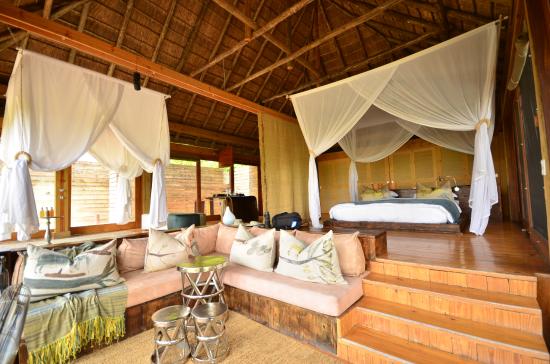
Photo credit: wilderness-safaris-vumbura
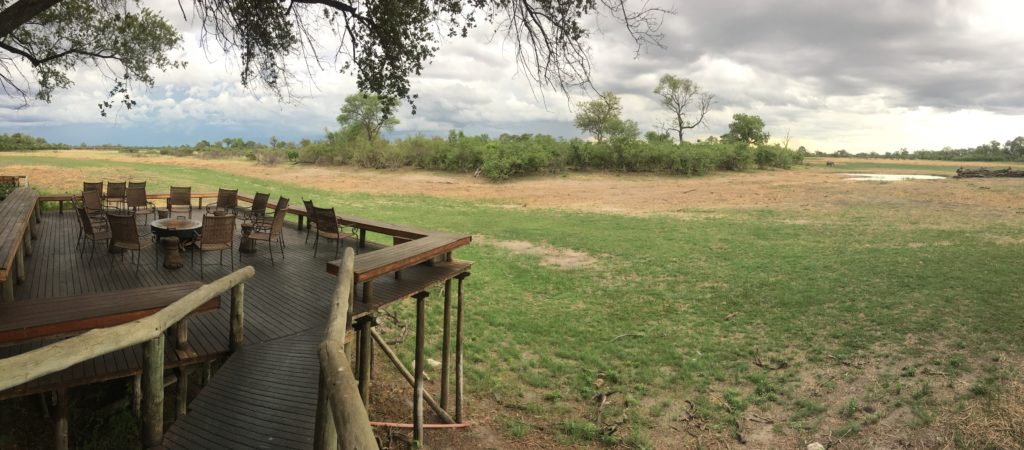
Photo credit: Allison Lee wilderness-safaris-savuti

Typically I don’t travel in luxury. I’m more of the camping/getting dirty/on-the-cheap/roughing it type of gal. But this. This, I had to bid on.

The bid started low: “Going for $1250, we have $1250, anyone for $1250, next at $2000, $2000, anyone for $2500? We have $2500, anyone for $3000, $3500?….

The bid crawled up to $5500. I quickly did the math for two: wait a minute, that’s only $2750 per person! I had to act fast.

I held my card in the air: ME!

$6000?”…

Another guy took the bid. Dammit!

The price climbed… $7000?  … $7500?

Trip for two. Six nights. Okavango Delta. All inclusive. High end (glamping) luxury safari. Got it. I knew that last year I had spent a month in Africa for $4000 so I set my price point and told myself I wouldn’t go over that per person.

$8000, do I hear $8000?” Prices were climbing fast.

Fuck it.

ME! I held my card high again.

$8000, anyone for $8500? $8500? Going once? Going twice? $8000 to the young lady!

Oh. My. God. What have a I just done?? I felt slight shock.

Everyone congratulated me and I held a smile on my face. Luckily, I had just paid off my credit card 10 days earlier, so there was room to go right back up to my credit limit. (Despite this story, I’m actually very good with money and have an above 820  top credit score. What’s money good for if you don’t spend it, right?!) Plus, it was going to a good cause. I already know adventure and conservation are my weaknesses financially.

Dr. Rasmussen approached me to thank me and I quickly told him I was also a scientist if he wanted help in the field. “Could I stay on after my trip and come visit you in Zimbabwe?!” I begged.

Absolutely!” he exclaimed. “But only if you like picking up poop.” (A comment only true wildlife biologists would get giddy over).

Phew. OK. My $8000 7-day trip for two would now become a month long trip for me. I would spend the safari in Botswana with someone (didn’t know who yet), then we would pop over to Zimbabwe to hang out with Dr. Rasmussen. I could handle that.

I sped home and furiously began to text anyone I knew if they wanted to join me on this adventure. I spent all night in a panic hearing “no” after “no” after “I would love to but can’t afford it”.

Then, I found her.

The lucky Partner in Adventure: my mom.
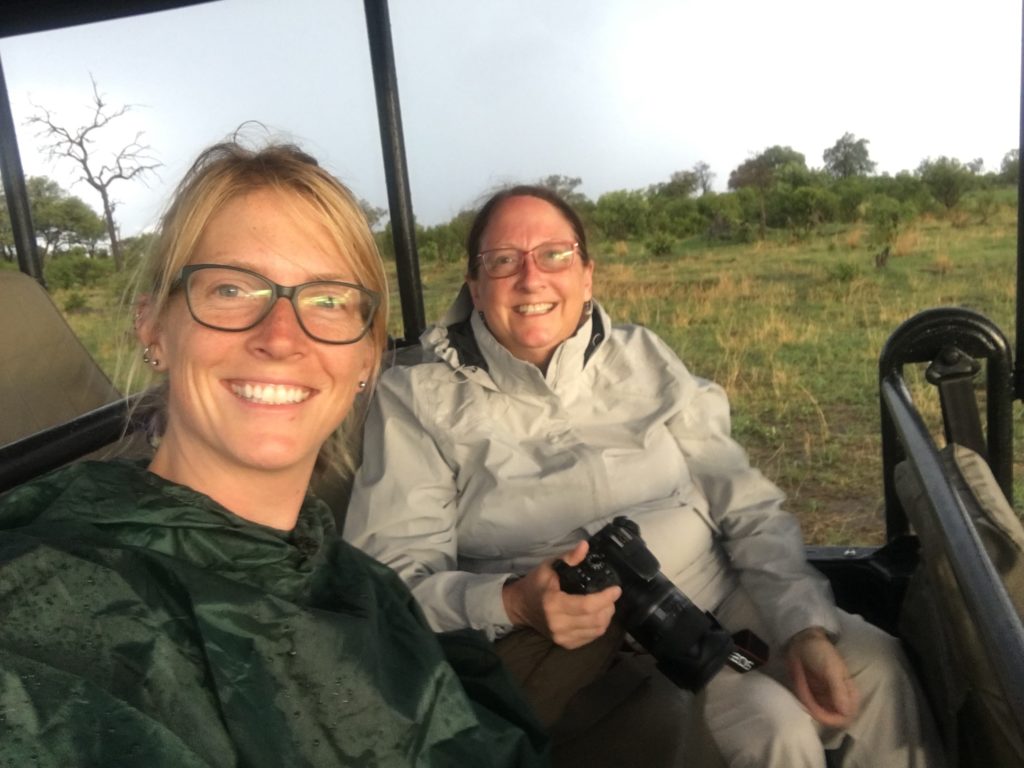
It was during the next couple of month’s that I found out I would be leaving my job at the Institute for Systems Biology to attend graduate school in June at Scripps Institution of Oceanography. I debated selling the trip since I would no longer have a salary, but I just couldn’t bring myself to do it. I HAD to go. Africa was waiting.

We booked our trip for December 10, 2016 (during my school’s winter break), and planned for it to have three parts:

  1. Cape Town Road Trip in South Africa
  2. Okavango Delta Safari in Botswana
  3. Visit with Dr. Rasmussen and Painted Dog Research Trust in Zimbabwe

My mom would spend 15 days total in Africa, and I would stay for 24. Then, we waited patiently for the day to arrive.

Ultimately, the trip ended up being pretty costly after purchasing flights from US to Africa, and flights within the countries of Africa ($3100+ in flights and travel insurance). But it was all worth it in the end.

I’ll end the story here in this blog post as its getting very long.

Stay tuned for continuing stories of Okavango Delta, Botswana and Zimbabwe Adventures…coming soon!

To see the next post on Part 1 of the Okavango Delta, click here.
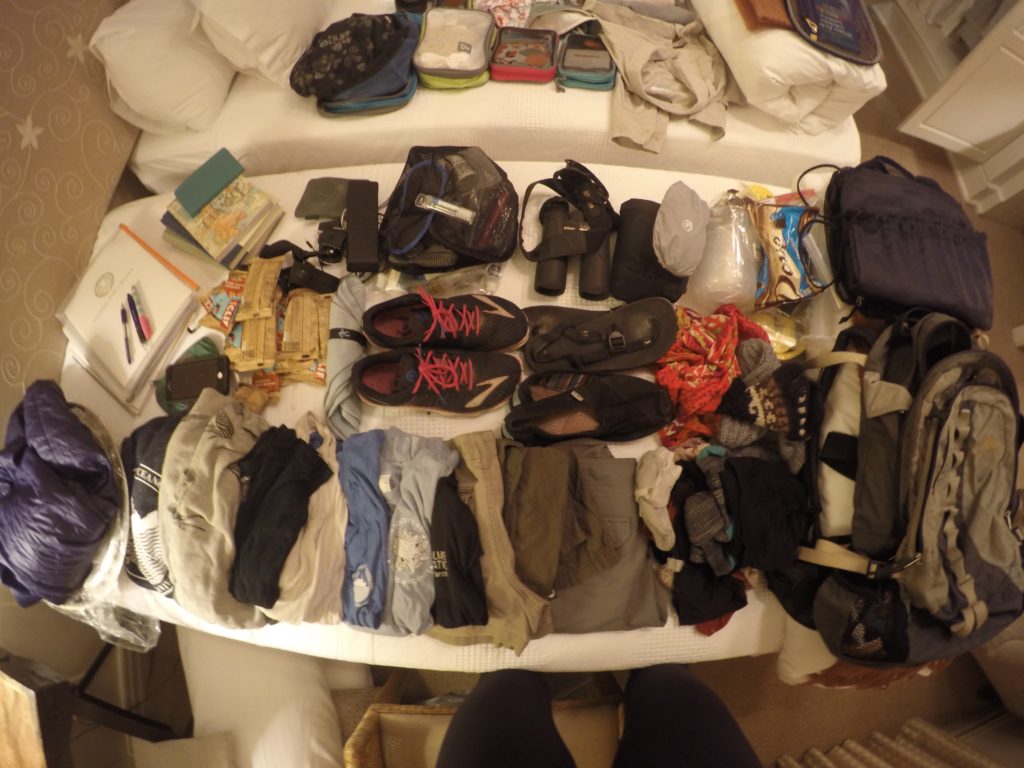
For those interested in what my packing list looked like, here is the run down with comments on what I used and wished I had packed.

  • sandals (luna)
  • flat walking shoes (Toms)
  • Running shoes (didn’t really wear)
  • warm socks (only wore one pair once)
  • bra (2 sports)/undies (10)
  • water bottle (used a lot)
  • cards (didn’t use)
  • book (read 2: Half-Earth by EO Wilson and Citizen Scientist by Mary Ellen Hannibal)
  • ziplocks
  • bug spray
  • small first aid kit
  • toiletries (toothbrush, toothpaste, shampoo, dry shampoo, floss, glasses, contacts, moist wipes, kleenex, chapstick, sunscreen)
  • sunglasses
  • good binoculars
  • pretty scarf (dresses up any boring outfit)
  • gloves/hat (didn’t use, but if I traveled in their winter, might have needed)
  • allergy meds/ibuprofen/malaria pills (used! Don’t forget the malaria pills)
  • headlamp/batteries
  • down jacket (only used on frigid airplane)
  • zip up hoodie sweater (used to ward off mosquitos but was too heavy for heat in general)
  • african print sweatshirt (great! light weight but gave good coverage and comfort)
  • two light weight hiking pants
  • one pair of shorts with pockets
  • three light t-shirts (blue, black, and blue)
  • two tank tops (black and white)
  • Safari button down long sleeve shirt (loose fitting clothes are excellent)
  • poncho (used once in a downpour)
  • GoPro / cords
  • iphone / cords
  • 6-charge battery pack (VERY handy)
  • small foldable backpack (day bag also used as additional carry on item for books and airplane needs under my seat)
  • small coin/card purse (could fit passport and phone)
  • small notebook/paper/pen
  • quick dry towel (never used)
  • 26 Clif Bars, just in case food situation wasn’t good (only ate 4, gave the rest away)
  • one 44 liter/2650 cubic inch carry on backpack to fit it all in (mine is the very old version of Kelty Redwing 2650)


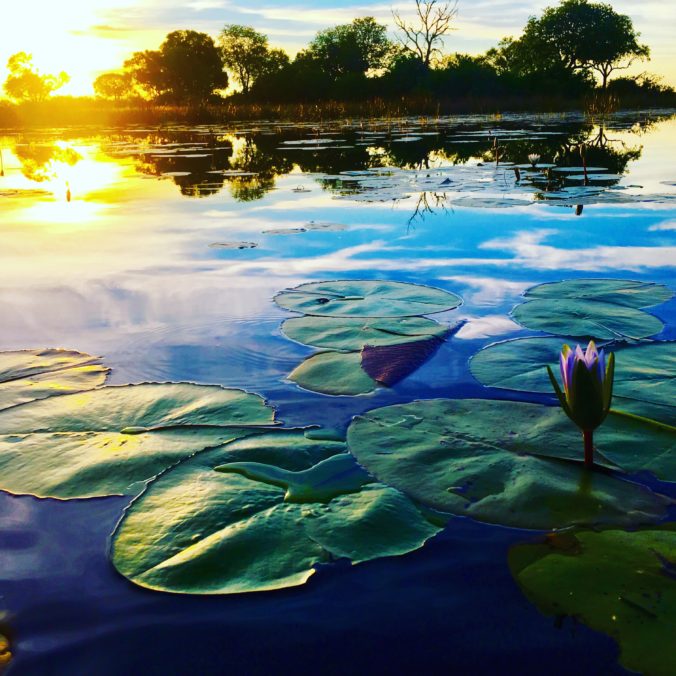
*Featured Image photo credit: Allison Lee

Share this:

Facebooktwitterby feather

Fifth Month of Grad Life

Hello! I completely bailed on making a recap video for month three and month four of grad life (coming soon). That’s because…well, grad life.

We are nearing the end of month five and I felt inspired to get back on the ball (or am heavily procrastinating on writing my term papers), so here is the latest recap video of our fifth month in graduate school.

Make sure to watch what we did during our first and second month.

To remind you all, I’m in the Master of Advanced Studies program at Scripps Institution of Oceanography studying Marine Biodiversity & Conservation. Its an amazing interdisciplinary program focusing on economics, policy, and social constraints and I highly recommend it!

I apologize in advanced for the incredibly choppy audio stitching–I clearly need to take a media productions class some day–but I wanted to at least share the content of how our month has progressed.

Thank you so much for watching!

Don’t forget to follow Woman Scientist for more inspiration on Facebook, YouTube, Twitter and Instagram.

Also, if you get out in the field for work, we’d love to share your career journey. Click this link to fill out the interview and inspire others to go in to science!

Share this:
Facebooktwitterby feather

Swift Interview with Corvid Expert Kaeli Swift

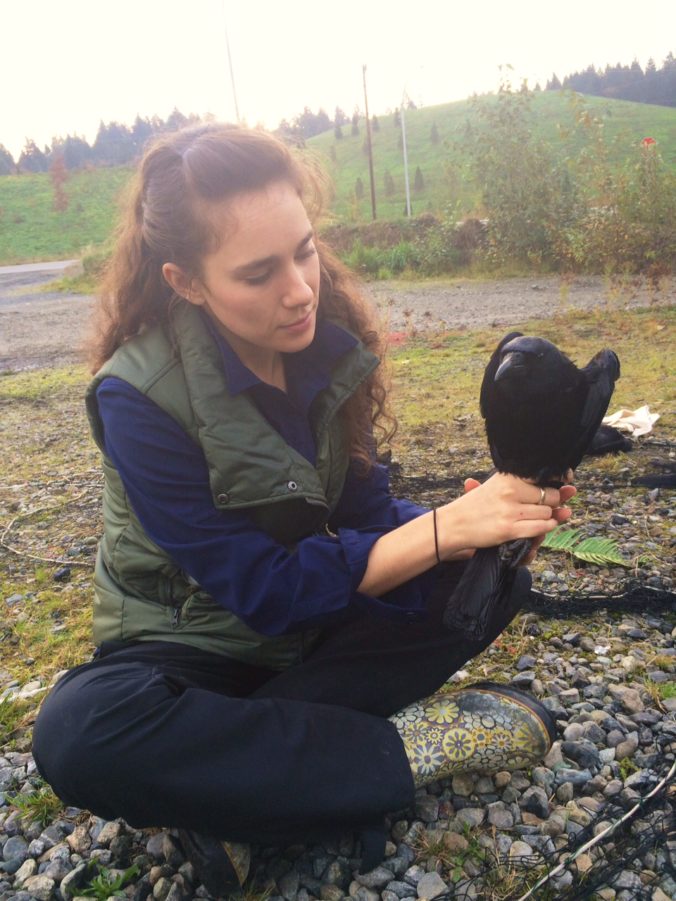
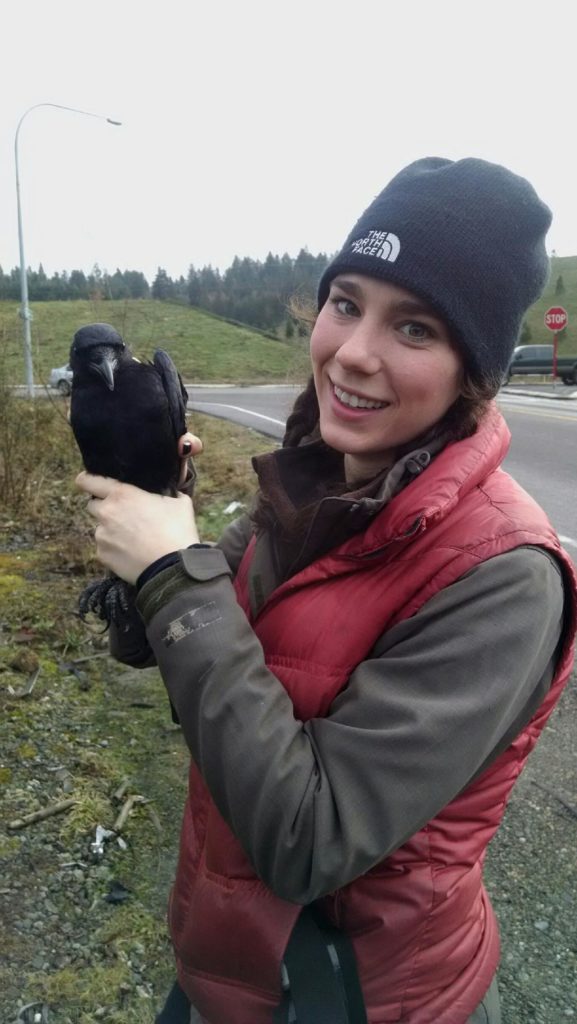
Kaeli Swift knows crows. Between her undergradaute work and current doctoral work, she’s studied them for nearly seven years.  While these exploits have given her a holistic education on all things crow, her current interest is in understanding their “funeral” behaviors.

Crows, in the family Corvidae, are known for their intelligence and adaptability. Everyone has a story, good or bad, which demonstrates the inquisitive, sometimes mischievous nature of these corvids.

To gain expertise as an ethologist and evolutionary biologist, Kaeli earned a Master’s degree and is currently pursuing her PhD at the School of Environmental and Forest Sciences at the University of Washington.

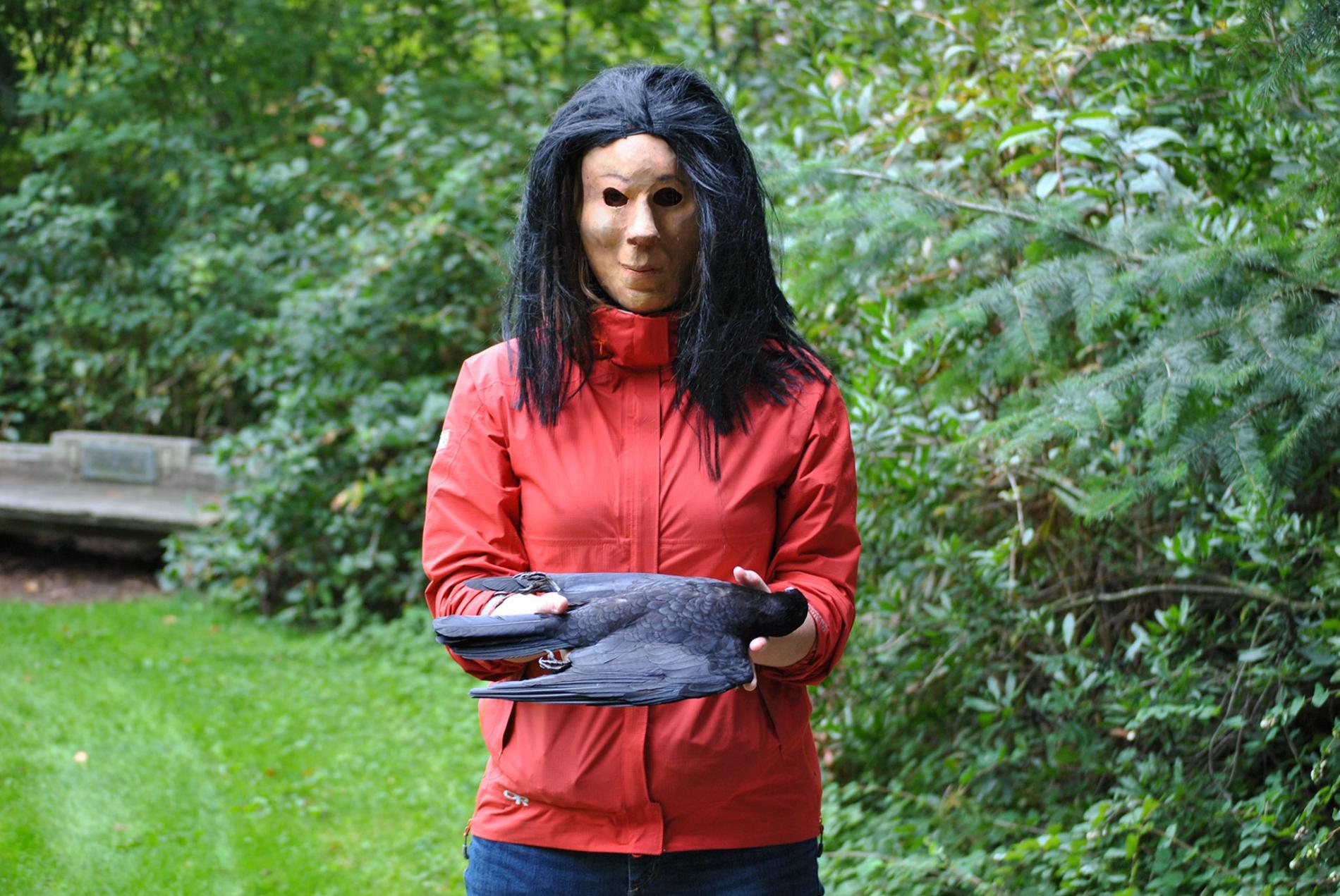
A masked individual held a dead crow for 30 minutes (Credit: Kaeli Swift)

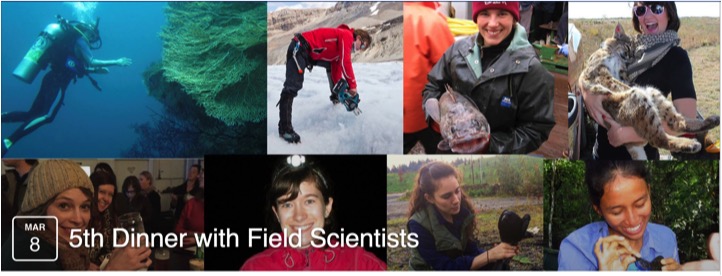
I met Kaeli at a dinner function in Seattle. Woman Scientist had just started hosting “Dinners with Field Scientists” — a night of informal connection between women pursuing careers in the sciences that get them out in the field. A mutual Field Scientist friend, Carolyn Rachel, brought her along. As we went around the table sharing our work, she spoke to us about studying funerals. The crow stories flew across the room.

5thdinner

Knowing her subject matter was such good conversation topic, I invited her to give a talk at the Institute for Systems Biology, where I worked at the time, for our informal luncheon discussion groups.  She came straight from the field to share with us everything we needed to know about crows and it was the most well attended luncheon I’ve seen.  The entire room was captivated by her research material and engaging presentation style.

Kaeli received her undergrad degree in Biology from Willamette University and knew that she wanted to go into wildlife biology. As a junior in undergrad, she started working with crows (and talking to John Marzluff), and crow work became the goal. Through her education she realized she wanted to have more power designing her own experiments. To figure out how to gain that independence, she made many calls to individuals who held job titles she saw herself having and asked what degrees they had.  Most earned degrees in higher education which inspired her to pursue a PhD.

Let’s hear more from Kaeli:

What was your first science-related job?

The summer of my Sophomore year I participated in The Student Collaborative Research Program which was basically a paid science internship (supported by the Murdock Charitable Trust). I looked at using the photo sharing network Flickr to track banded bird sightings.  
Did you have any preconceived notions about science, or scientists, and did that change once you explored your career in science?
I thought it was cleaner. You learn about these famous experiments, even animal behavior experiments, and you have no idea how much mess and disaster goes into actually producing the data. It’s much less precise than I pictured when I was a young student doing mostly very simple lab experiments.  

Kaeli and John Marzluff look at the brain activity of crows.

What is your earliest memory of being hooked by science?

When I was in 3rd grade I designed an experiment to test if goldfish had memory.  

Was there any one person that inspired you?

Jane Goodall

What do you want to achieve in your career? What is your big dream?

When we think of the most famous contemporary faces of science, the people who have made careers out of translating science for the public, the reality is that they  are still (mostly) white men.  Women, people of color, members of the LGBTQ community, are all an increasing (albeit still minority) presence in the highest levels of academia and I want to be part of the force normalizing their faces as the faces of science.  I love talking about my research, and science more broadly, with the public and I’d love to turn that passion into a career.  To do so at the level of someone like Neil Degrasse Tyson or Bill Nye would be the ultimate goal.   

Photo credit: Michael Werner.

Has your work allowed you to travel? If so, where have you gone and what were you doing there?

I’ve been to Australia to do a 3 month tech job looking at sexual selection in Satin bowerbirds. It was the hardest physical job I’ve ever had, but it was by far the most beautiful and exciting. Then I went to IN for the private sector job. It was the exact opposite of the Aussie job in every way.  

Tell about your experiences working in different sectors?

I’ve worked in academia and the private sector (I worked for 2 seasons with biological consulting firm). The private sector stuff paid BANK but there was also a nagging discomfort in knowing my bosses were paid by people who had very vested interests in the outcomes of our research. That being said I never witnessed anything that looked suspicious or like bad science. They treated us well, safety was taken seriously, and there were serious financial perks. Academia on the other hand is a bit more wild west. The pay is often meager, people hardly ever talk seriously about safety in the field, but there’s so much more freedom to ask crazy interesting questions.

What were or currently are some big compromises or struggles you’ve experienced making a career for yourself in the science world?

Temporary field work was always tough before grad school because I was in a relationship. My husband and I have spent most every year apart, at first because of my job and more recently because of his. That was hard. Now, being a grad student, it feels like all our friends are growing up and moving on with their lives (buying homes, earning a decent wage, starting families) and we’re living the same life we did 10 years ago in college.  

What keeps you motivated when you’re feeling the drudgery? 

Sharing stories with my colleagues or engaging with my study animal in a non scientific way. Oh, and of course doing public talks. They’re maybe the biggest pick me up. They’re a great opportunity to recognize how much stuff you do actually know (grad school has a way of becoming Ygritte –Game of Thrones reference), be supported by kind strangers, and take your academia hat off and just tell people about all the best/most interesting aspects of your field.

What are some key points you remind yourself of during your science career journey?

That other people have the same doubts that I do. Doubts about their path, their qualifications, and their achievements.  

What are some inspirational materials you’ve used along the way?

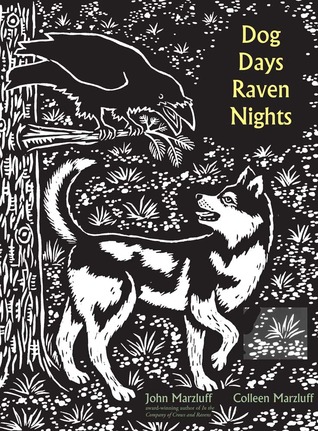
TED talks are great! Also, Dogs Days Raven Nights by John and Colleen Marzluff is a great look at the post-doc experience.

dodays

Thank you for the doing this interview Kaeli! 

I know Kaeli’s story ended too soon and you’re probably hooked on wanting to hear more about her research with crows. Well, you can!

Be sure to follow Kaeli on Instagram, Twitter, and via her engaging blog posts!

If you liked this interview, please share it!  And if you’re a Woman Scientist doing work out in the field, or know someone who is, we’d love to hear your career journey. Please fill out the interview by clicking here.


Share this:
Facebooktwitterby feather

The Story of Texas Wild’s Jessie Story

If you haven’t heard of Texas Wild make sure to watch this clip now:


Ray and Jessie’s work with Texas Wild is produced at West Texas A&M University in cooperation with Panhandle PBS KACV and reaches viewers in over 250,000 homes. In 2016, Jessie was awarded the Dan A. Klepper Memorial Scholarship from Texas Outdoors Writer’s Association for her work merging wildlife education and improving science literacy with the public through social media and television.

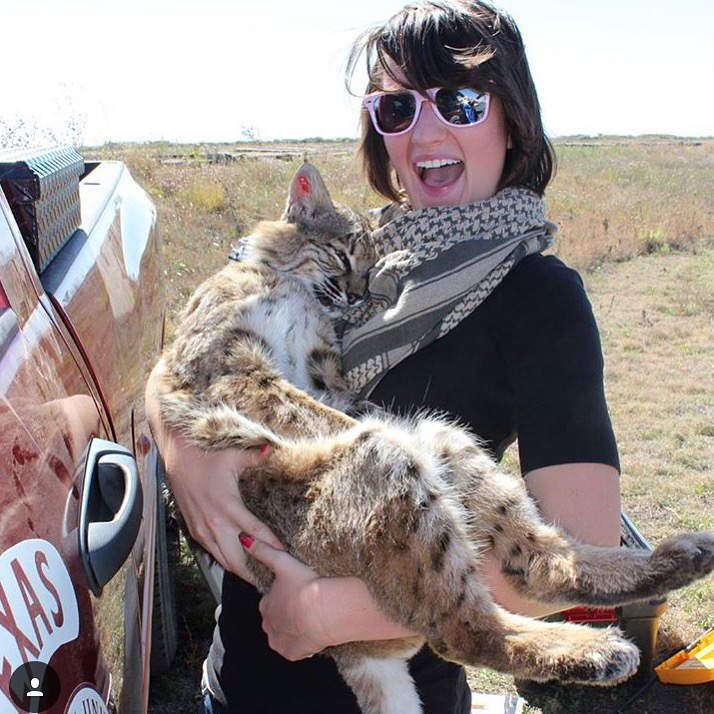
I first learned of Texas Wild via Instagram when Jessie Story introduced herself and shared a stunning photograph of her holding her first bobcat as a field assistant on a carnivore research project. I shared the image with all of you on Woman Scientist’s Instagram account and immediately asked Jessie to do an interview. She gladly agreed!

Jessie Story with Bobcat

Those who work with Jessie Story in the field describe her as being a “tough-as-nails outdoors person that will sleep anywhere, work in any conditions, fears nothing (except heights a little), and is low maintenance. She can handle venomous snakes, canoes and kayaks, snorkels and films underwater, and is a capable spelunker.”

Her partner, Ray Matlack, describes her as the energy that keeps Texas Wild going.

She describes herself as a bit of a fashionista. “I like my handbags, a bi-weekly trip to the nail salon and wearing my sandals to lunch. Leather jackets, scarfs and all black attire are my go-to’s. Equally, I enjoy catching animals, swamps, camping, getting lost and getting dirt on my face. Don’t let my appearance fool you!”

Let’s hear more from Jessie:

Jessie in Canyon Square 5

What is your earliest memory of being hooked by science?

Sharks.

As far back as I can remember I was fascinated by sharks. Since I was a child, reading has been a central pastime in my family. My mother is an avid reader which led to weekly trips to the library where she would swap out her bag of books. Some of my fondest memories are tagging along with my mother on her weekly Library trips where I would position myself in the aisle that held, on the bottom shelf, books about sharks. I would sit and flip through the pages while my mother browsed (as a child and young adult, I battled a severe speech impediment). Aside from sitting in the library aisle, I attended storytelling session in the library. I remember Native American stories as well as “Stellaluna,” an experience that shaped my love of bats.


Growing up I inhaled a large amount of nature and science documentaries, from sharks to Bill Nye. I watched as biologists explained their research and the tracking methods of specimens. I then would try to replicate the monitoring and data techniques. I would measure, weigh and sketch the patterns and morphological characteristics (such as lack of toe in Woodhouse’s toad) before releasing them. I was always fascinated by the animals themselves and this was just another way for me to handle wildlife.

Has your work allowed you to travel?

Man, I’ve been everywhere. My primary home range has been Texas–every inch of her–for the past 3 years during the creation of Texas Wild. Born in Amarillo, I reside in Canyon and consider Bastrop TX, a second home. Other activities have carried me outside of my home range from sleeping in the back of a Toyota truck on top of tripods in below-freezing temperatures at Bosque del Apache to the Sandhills of Nebraska and traversing large portions of the Great Plains. I’ve traveled from my hometown, Amarillo to Key West, scouting locations for future filming.

During the past three years working in the field for both research and film purposes, I travel the majority of the year often missing family holidays, celebrations and birthdays. This past Thanksgiving was the first holiday I’ve been home for in those 3 years

Did you have any preconceived notions about science, or scientists, and did that change once you explored your career in science?

Starting my academic career I really had no preconceived notions or expectations. One observation I quickly made was that there has been a separation between the scientific community and the public for far too long. The media has been an influencing factor in the creation of that gap. With that said, as members of the scientific community we can ill afford to not stand behind a proactive movement propelled within the realm of social media. Social networks are being used as tools to bridge this gap and to further connect the public with those in the scientific community.

KD1A2930 Filming bats in a cave

What is the big dream for your career?

To continue on my current path, traveling, filming and learning. As long as there is a camera in my hand, miles to cover and an intellectually stimulating environment, I’ll be content.

Was there any one person that inspired you?

Truthfully, there isn’t just one person who has influenced me. My drive is the result of books, music, plays, people I’ve meet along the way, childhood experiences and hockey (it sounds strange, I know but life is the place we spend in between hockey games). My parents have been a pivotal force for me; they have been married for 50 year now and have always been travelers.

What are your go-to inspirational materials?

Find what moves you whether that aligns with your path or not. Enjoy it, break it down and examine the pieces. Find out what parts reached out and grabbed you in the first place. Understanding why this “thing” lead to you become so enamored with it, will reveal what paths you should follow in your future.

Filming underwater

What were, or currently are, some big compromises or struggles you’ve experienced making a career for yourself?

The first struggle I’ve faced is “colleague conflict,” a little phrase I use that embodies the backlash one can experience as a result of their ideas, accomplishments, research or other academic endeavors. I experienced this as an undergrad at West Texas A&M University (WTAMU) when I beat out a graduate student for a position on a project. The following years introduced me intimately to “colleague conflict” as the grudge was carried by the student. As I continue my work, there is a realization that “colleague conflict” is an element that will always exist.

Another memorable experience that I get to hold close to me is being told my work holds no purpose or merit. In the aforementioned story, the very person I out-competed, told me that my work didn’t matter and “to compare you to me is like comparing apples to oranges!” Nothing woos me more. There has been a small crowd of people throughout my life and more recently, during my college career, who have lamented similar opinions and have tried to discredit the efforts that Ray and I have put forth in our time creating Texas Wild. It helps having someone like Ray in your corner during these times; he’s an optimist who never says die. As fate would have it, opposing forces have become powerful and motivating force.

Personal struggles include battling a speech impediment as a child and throughout my young adulthood. It took years of extensive speech therapy to get to the point I am today. I remember trying to learn how to say the phrase “the squirrel squatted in the square.” My speech impediment has made college that much more challenging to me. Family and friends keep me going.

What are some key points you wish you knew or that you remind yourself of during your science career journey?

Safety, safety first. Then teamwork.

What keeps you motivated when you’re feeling the drudgery?  

The experiences you gain as a result of this lifestyle. I have a Patagonia hat I picked up in Florida a few years back. This hat is one of a few valued treasures of mine that I take on the road. The hat alone has traveled seven states, bares the ink stains from an octopus (bikini as well), was lost in Lake Jessup FL, which has 421 alligators/mile of shoreline (a childhood hangout for Ray), worn during an encounter with an 2.5ft nurse shark and has been envenomed by a broad-banded copperhead.

I had the fortunate of filming the largest bat colony, Bracken Cave, home to 15 million free-tailed bats and carry a scar on my left hand from a water snake which certainly puts a dent on my career as a hand model and experienced parasites.

Ray and I rediscovered the endangered Houston toads calling and filmed several other endangered species, flipped out of truck windows, broken equipment, missed the best shots, been hypothermic and seen parts of Texas, most never will. It’s the excitement of what comes next.

Another motivating factor is the impact this effort is making. I too often forget to reflect on how far this team of two has come, something Ray has taught me to do more of. We are self-taught and have been fortunate enough to gain a following of people who genuinely care about the cause. Most rewarding is when you see this passion being instilled in the next generation.

The End

A huge thank you to Jessie for sharing your inspirational journey with us and thank you to all reading!  

Share

Did you like this interview? Share it with your friends to inspire the next generation of women to build science careers that get them out in the field!

Keep in Touch with Texas Wild

Media from Texas Wild has aired on the Red Steagall Show and The Daytripper. Social media posts have been researched by many conservation groups such as The Nature Conservancy-Texas and even groups as far as Australia. They’ve paired with schools around Texas so teachers can use their media in alignment with education curriculum to encourage and teach appreciation and conservation for wildlife.

Be sure to follow them on PBS, the Web, the blog, Instagram, and Facebook.  

All media was provided courtesy of the Texas Wild team!

Share this:
Facebooktwitterby feather

When I Stopped Chasing The Dream Job, I Discovered My Dream Career

Re-posting an article I wrote for National Girls Collaborative Project, because I’ve added fun links in this version! You can read the original article published on National Girls Collaborative Project Blog  (submitted by Greta Carlson on April 29, 2016 – 2:20 pm)

Contributed by Allison Lee 

Growing up I never had a clear picture of what I wanted to become. Inspecting insects, creating mud-pies and gazing at the stars were childhood past times and as I grew into a teenager I embraced traveling and learning more about nature. I didn’t immediately connect all of these interests with becoming a scientist. My parents were not scientists. No one in my family had degrees beyond a high school diploma.  I remember wondering if I even needed to go to college. I spent  years frustrated by my lack of vision; finding the dream job I felt contained all of my passions was a struggle.

By the time I turned 30, I had traveled to all seven continents as a Biologist studying a diversity of lifeforms from microscopic algae, to songbirds, parrots, mice, squirrels, big cats, and whales. Obviously I figured something out! Life is funny that way. A hunch paired with the right blend of curiosity, odd jobs, research-focused vacations, volunteer opportunities, frugal living, and luck delivered me to my dream career.

Finding my passion
In my high school senior yearbook I wrote that I wanted to be an astronaut. I thought astronauts traveled the most of anyone on Earth. Inspired, I researched the degrees earned by NASA’s astronauts and found an overwhelming proportion had studied science. I decided to major in biology and geology at the University of Washington. It wasn’t until sophomore year when I had the epiphany that biology was my passion.

The scope of biology is broad and I wanted to learn as many disciplines as possible. Senior year, I signed up for an internship in neuroscience at the Allen Institute for Brain Science and found a part-time lab job in the Immunology Department taking care of a mouse colony. I started learning molecular techniques and computer programs, using fancy pieces of equipment, and doing those things called PCRs and Southern Blots. I wasn’t entirely sure what was going on – but I was doing SCIENCE!

6_lab

Questioning my interests
After I graduated with my Bachelor of Science in Biology, I continued to work full time in the immunology lab. Two and a half years passed. Restlessness set in and I began to wonder if maybe I just didn’t like science anymore. I knew one next possible move was to go to graduate school, like many of my college peers, but I didn’t know what I wanted to commit to studying. I wasn’t inspired by my neurobiology or immunology experiences. I hated doing computer work. I felt stuck. So I did the thing you’re never supposed to do: I quit.

The next two months were spent feverishly searching job boards, institute websites, and email listservs. Because of my interest in many aspects of biology, I didn’t know where to focus my efforts. Regardless, I felt optimistic that my Dream Job was out there. A job posting for a field technician conducting songbird research caught my eye. I didn’t know much about birds, but I convinced the interviewer I could learn bird songs because I learned other languages easily and had been playing music for 15 years. It worked! Every morning I woke at 4:00 AM to get to the field site before the sun rose. I got paid to be outside tromping through the woods looking for birds. It was during these quiet twilight mornings, outside in nature, that I realized THIS was my dream job. I never wanted it to end.

But, as is the nature of seasonal fieldwork, it did. Five months later, I found myself once again unemployed. Turns out, seasonal work is the usual for field technicians. I knew that field biology wouldn’t be the most lucrative career choice, but I felt empowered to commit myself to studying the environment – whether I got paid for it or not.

3_songbirds

The sacrifices
I went on a quest to find as many wildlife jobs as I could. Later that year, I studied forest fire treatments on threatened squirrel populations; I studied the breeding behaviors of endangered parrots in Mexico. Each time, the pay was minimal to none, so I worked side-gigs as a professional baker and bartender to pay my bills. While I was happy to gallivant around the woods for science, working for free wasn’t exactly the dream job I had in mind. I was turning into a poor disgruntled vagabond.

In an effort to gain a sustainable salary, I left fieldwork and went back into the lab to begin a project at the Institute for Systems Biology (ISB) investigating the genetic responses of algae to climate change and ocean acidification. I knew nothing about marine systems but I had skills in the lab and stellar references. Part of me thought leaving the field was a mistake but as I gained exposure to the natural world within a molecular science framework, I saw the impact of a systems approach to research and I was hooked. I still missed going out into nature every day, but I kept an open mind and a positive attitude.

Over six years have passed since I went back into the lab and the job has given me more opportunities than I could have imagined. What started off as a lab job performing controlled experiments on algae has evolved into a field job sampling algae from the natural environment. This work has led me all over the Puget Sound area of Washington, as well as to Hawaii, and even as far as Antarctica!

7_cytometerlab

The best of both worlds
As a field scientist working indoors, I still daydreamed about the rainforests. On the weekends, I’d flee to the mountains. With a bit of money saved up, I decided to satisfy my restless soul. I used my vacations to help conduct research on voluntourism projects, like Earthwatch. From aboard a restored rubber boom era steamship, I spent three weeks studying biodiversity in the Amazon jungle. I realized I could save my money, use my vacation time to get out in the field, and still have a paying job in science. It was the best of both worlds!

The plan is working. I’ve volunteered on projects studying macaws with Tambopata Research Center in Peru, biodiversity in the Amazon, big cats in Africa, and whales in Mexico. I love volunteering so much I do it at home too, giving time to local conservation organizations like Conservation Northwest. We work to mitigate human wildlife conflicts in the migration corridors of the Cascades. I also get kids outdoors with the Sierra Club, and spend time with kids through Ocean Inquiry Project, the Woodland Park Zoo, and Pacific Science Center. I speak about careers in environmental science with students to convey my passion for nature and inspire another generation to care about protecting the biodiversity on Earth.

12_planktontow

What’s in a dream?
I’ve come to believe the dream job doesn’t exist for me, and I don’t think it’s beneficial to maintain that perspective. I have too many passions – too much wonder for the potential of science in the world. I find fulfillment in contributing to important work for the environment and interacting with innovative collaborative thinkers. I benefit from an extremely flexible schedule, live in the city, and travel to amazing places through work. And I’ve been lucky to have many other amazing experiences volunteering with local and international conservation organizations. I am continually seeking as many opportunities as I can find, but this time things are different; I’m no longer looking for the Dream Job, I am creating the Dream Career.

1_profile

Allison Lee is a Seattle native who loves coffee, talking to people, and learning new things. When she’s not doing science you can catch her ultra-running, cycling, hiking in nature, traveling, and burning the candle at both ends. At age 32, she has finally realized the differences between working a job and building a career. This summer she will begin a Masters degree in Marine Biodiversity and Conservation at Scripps Institution of Oceanography in San Diego California with the hopes of following another curiosity: the social, economic and policy side of marine science. You can follow her and see examples of other inspirational women working in the field at Woman Scientist on Instagram, Facebook, and the Web.

**UPDATE** (April 2018): Allison graduated with her Master’s degree June 2017 and shortly after received funding from the National Science Foundation to support the Capstone project she created with Dr. Maria Vernet (watch the video here). Allison is now in the Biological Oceanography PhD program with Dr. Vernet at Scripps Institution of Oceanography leading the FjordPhyto citizen science project with tourists in Antarctica and the Arctic. She also works part time as a Senior Research Associate at Synthetic Genomics (Target CW) to advance breakthroughs in algal biofuel research.

Share this:
Facebooktwitterby feather

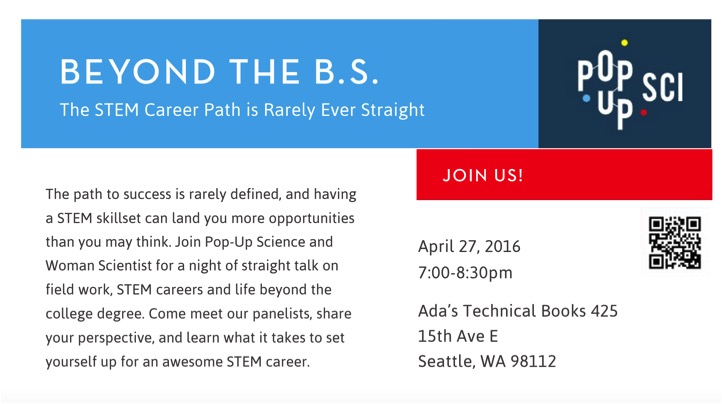
Beyond the B.S. ~ Career Panel Pop-Up Event

Woman Scientist and Pop-Up Science have partnered once again to bring you Beyond the B.S. – a series of free informal panel discussions for women in science, technology, and engineering looking to find their place in both life and work.


title

Beyond the B.S. seeks to provide women aged 15-30 a welcoming place to learn about their options, share their stories, and support each other’s career goals. Each event features two female panelists and an open Q&A which aims to give students a more creative understanding of the job opportunitites that lie before them.

curves

There’s a lot more out there than just bench research and medical school, ladies! Join us for a night of straight talk on science, STEM careers, and life beyond the college degree — by women, for women.

who

Gracious Event Location Host:

Ada’s Technical Books & Cafe – Capitol Hill in Seattle, WA

Download and share the Flyer here .   Hope to see you there!

Share this:
Facebooktwitterby feather

Seal Blubber and Holiday Runs | Field Diaries – Weddell Seal Team

The seventh and final post in the Antarctica: Weddell Seal Team series comes to us from Erika Nunlist.

If you haven’t yet, be sure to read the first post in this series for more background on the project and the team. You can also read the 2nd3rd4th5th, and 6th posts if you missed them.

If you would like to help support this project, head on over to their campaign on Experiment! They only have 1 day left to reach their goal! 

Ice Livin’

December 6, 2015

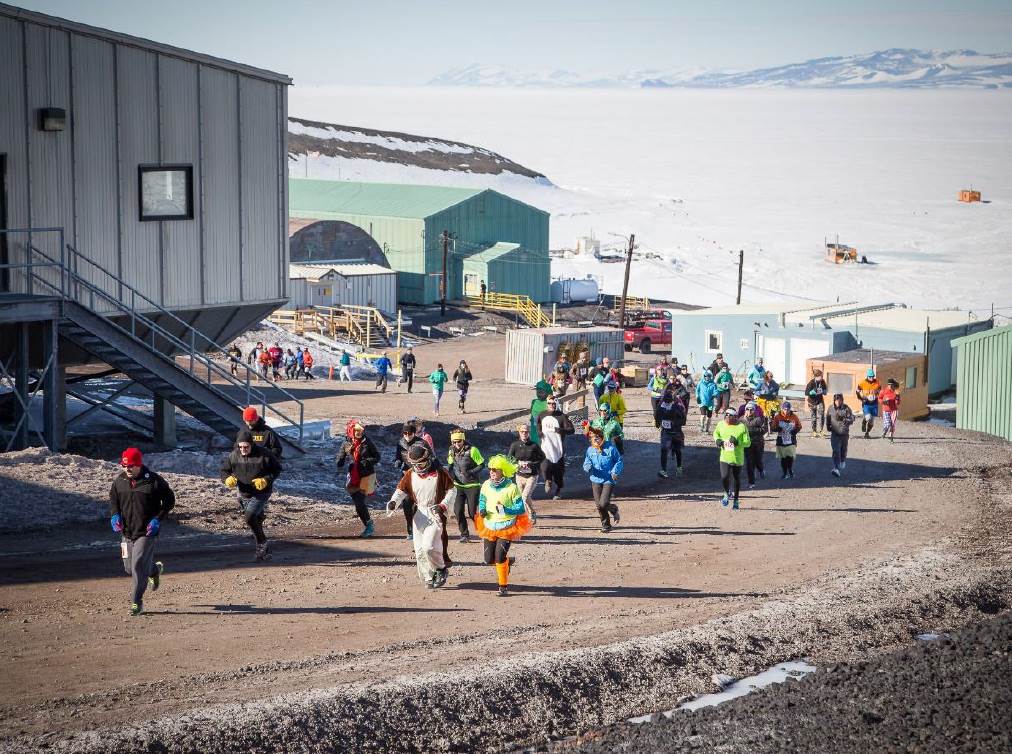
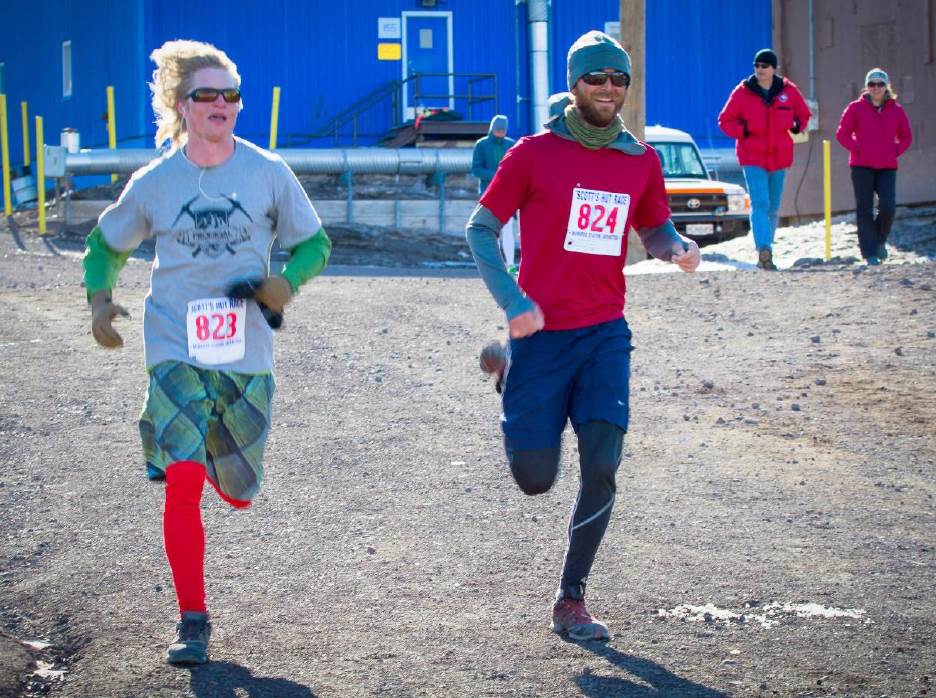
As always, work and life down here has been fun filled and fast paced. We had a great Thanksgiving – McMurdo did some fine cooking. I was just as uncomfortably full as ever. I unfortunately do not have any pictures of the meal, but I do have pictures of the Turkey Trot we did earlier in the day!

Picture13

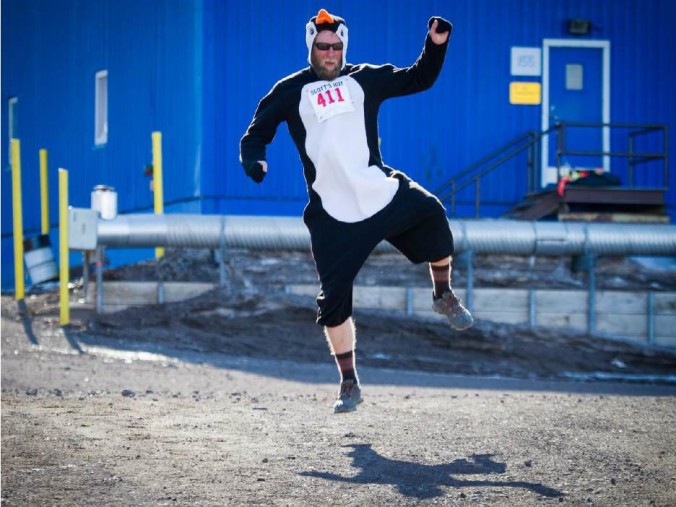
The Turkey Trot. There were around maybe 100 people that ran it, many of which were dressed up in fun outfits. These pictures are all from a guy name Greg Stone in McMurdo who I actually don’t know but he shared his pictures with everyone in McMurdo. This is a shot of people about a quarter mile from the start.

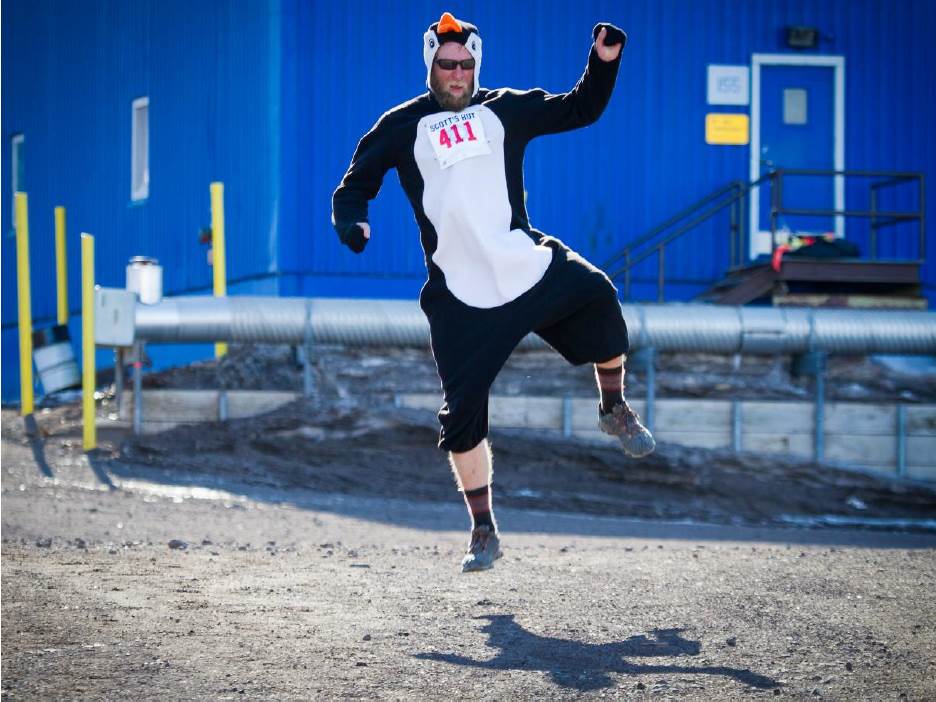
Picture12

I think this may be one of the best shots, also by Greg Stone. There were more than one penguin outfits running that day.

Picture11

Eric and Ross at the finish line. Photo by Greg Stone again.

Picture10

We only have a handful of days left here in Antarctica and times flyin’. This is one of my favorite ‘working’ photos to date. Terrill and Kaitlin near the end of a work day– I think there was an Adelie that Kaitlin was taking pictures of. My pictures of the Adelie weren’t nearly as good as this one.

Picture9

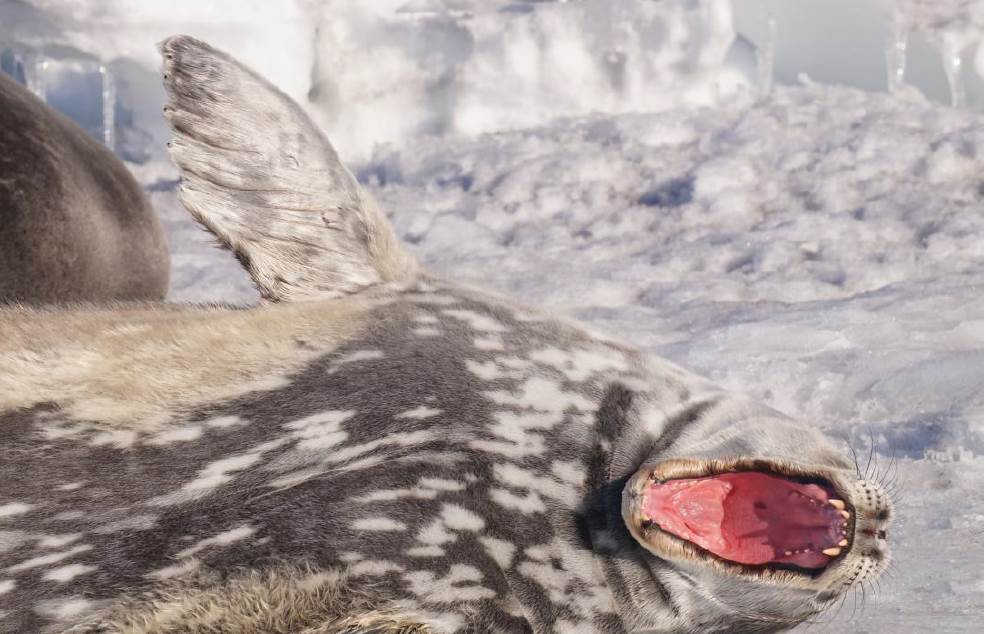
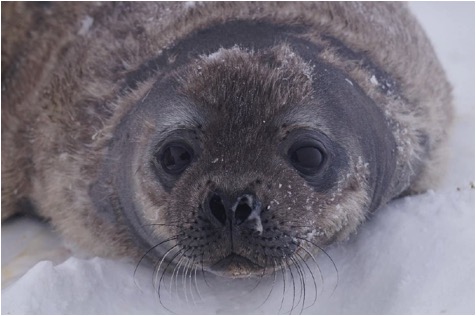
After realizing that we have so little time left I have made an effort to take a few more photos of the seals. This is from one evening in the colony just behind camp. This pup is just yawning but he looks pretty fierce!

Picture8

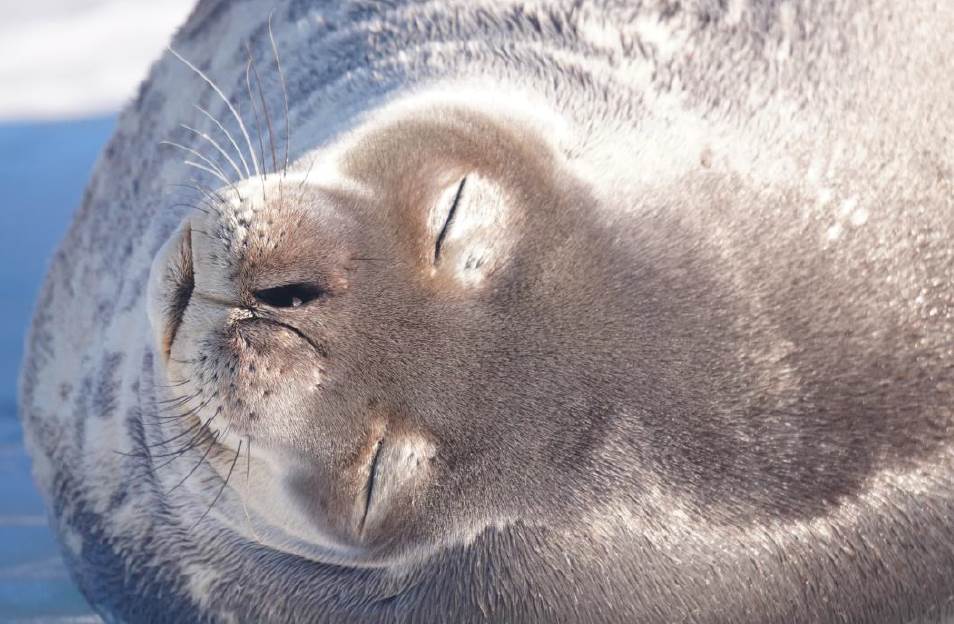
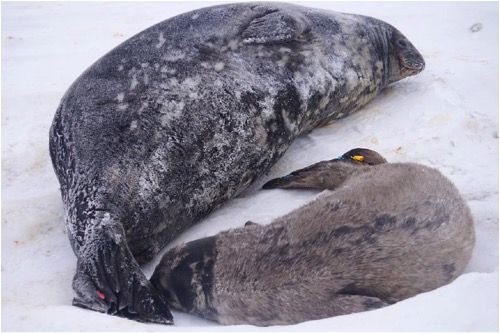
A sleeping mom. She didn’t give two hoots that I was around taking pictures, obviously.

Picture7

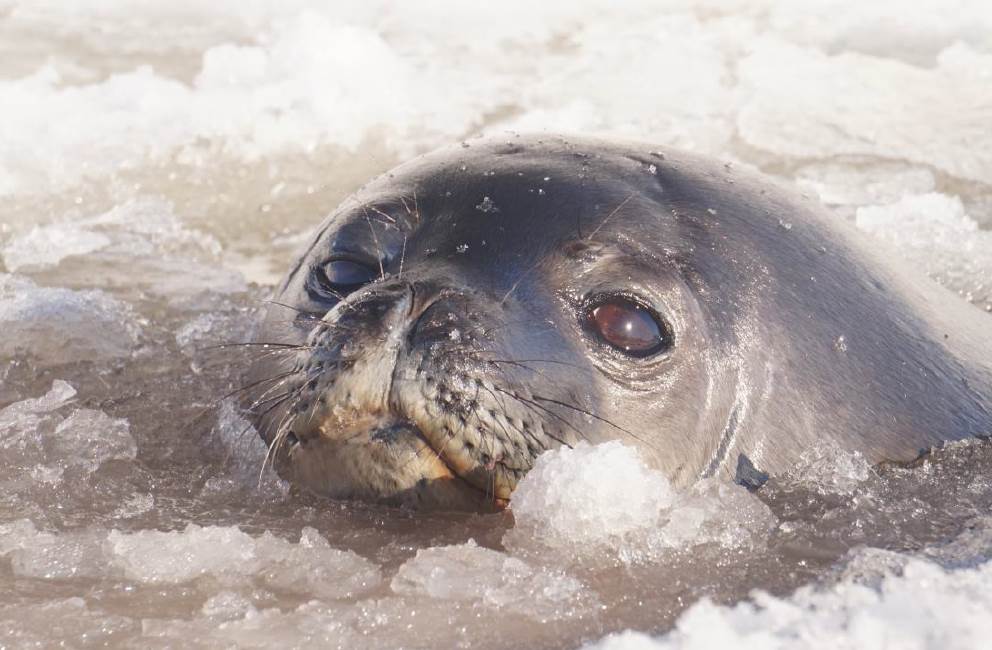
An adult seal coming up for a breath and thinking about coming out of the water.

Picture6

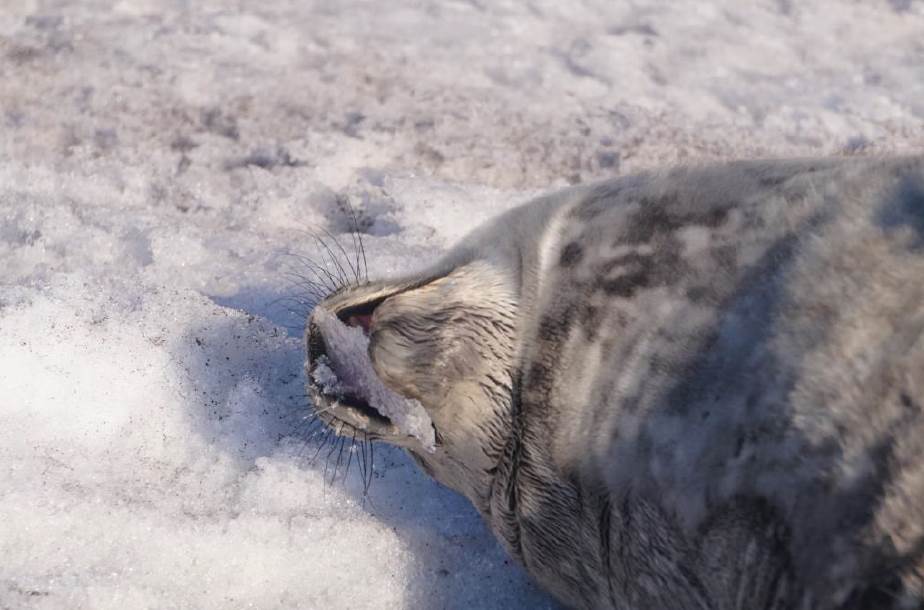
Seal pups are little punks. They’re very curious and playful. I find it hilarious watching them entertain themselves and bug their moms. I’ve seen many pups just crawling all over their mom while the mom is trying to sleep. This guy was picking up snow and rolling around with it, dropping it, picking it up again, seemingly very entertained by the snow piece. On another note, apparently seals will eat snow when it is ‘hot’ outside to cool themselves down. With it being up to around 35 degrees in the last couple days, I have definitely witnessed this. I wonder just how much a little bit of snow can cool off such a big mammal though.

Picture5

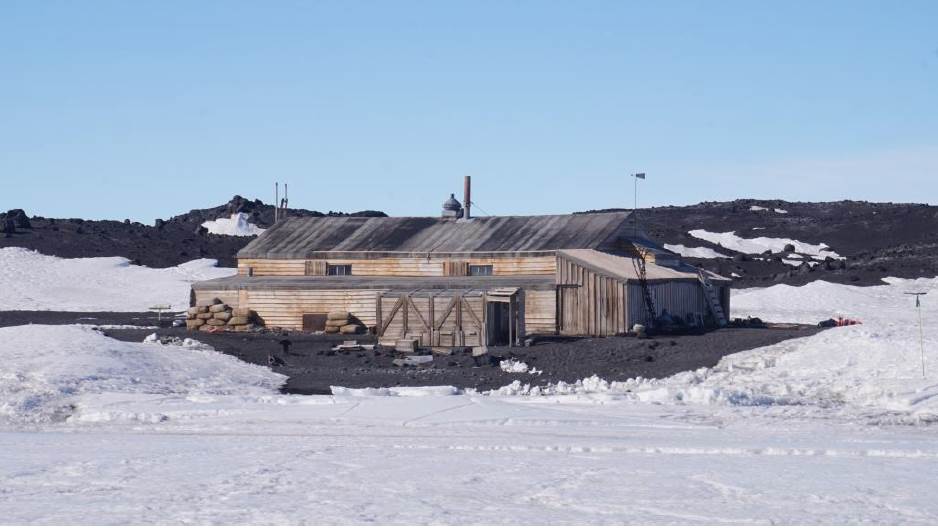
With work slowing down a little bit we’ve had time for some sight-seeing. A couple days ago we went to a hut at Cape Evans used for some of the early expeditions of Antarctica.

Picture4

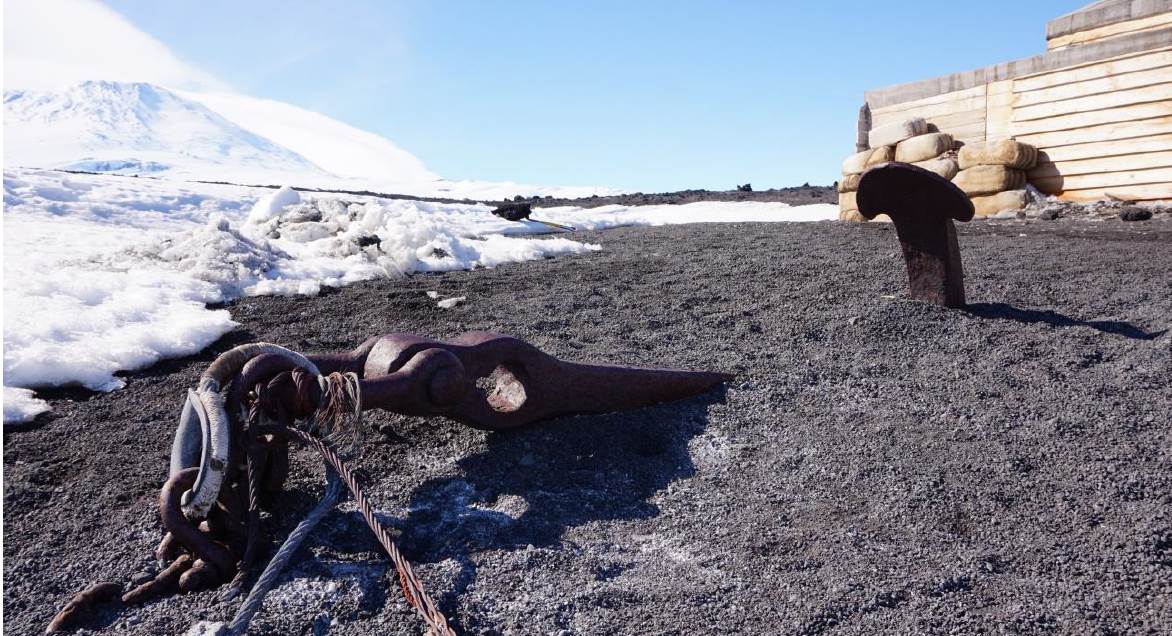
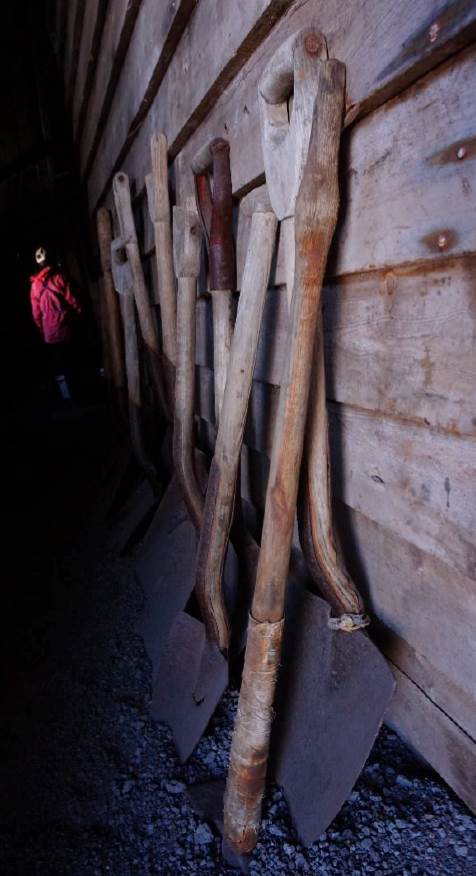
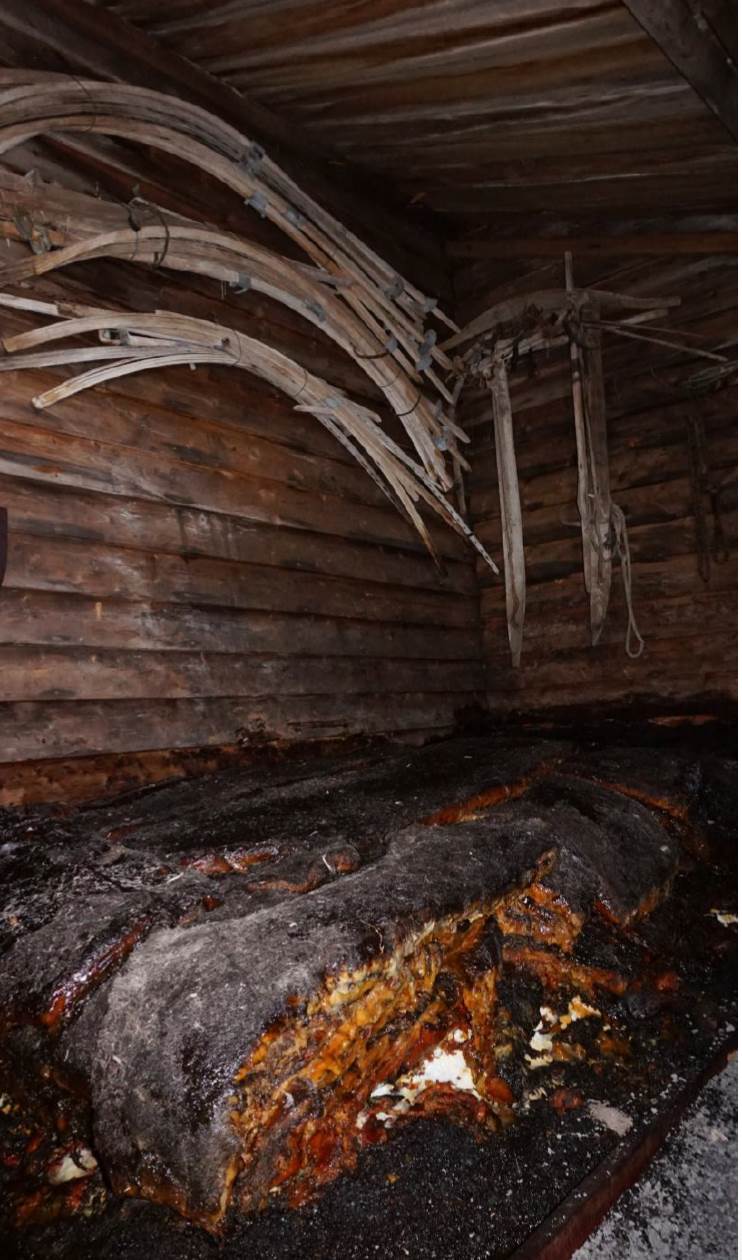
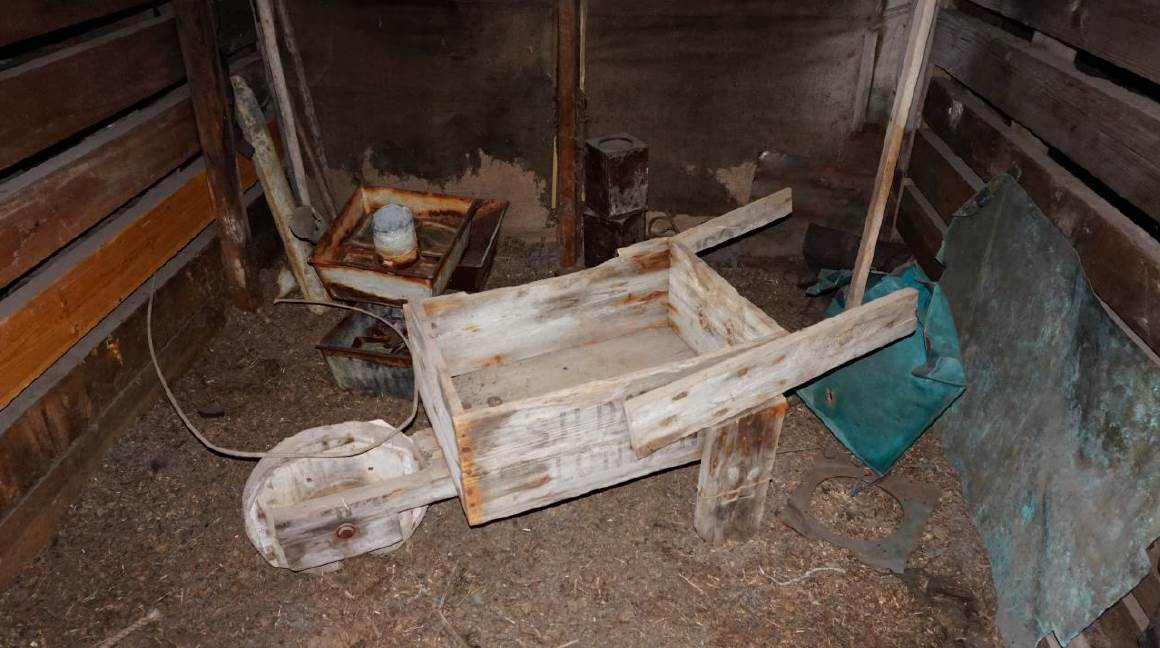
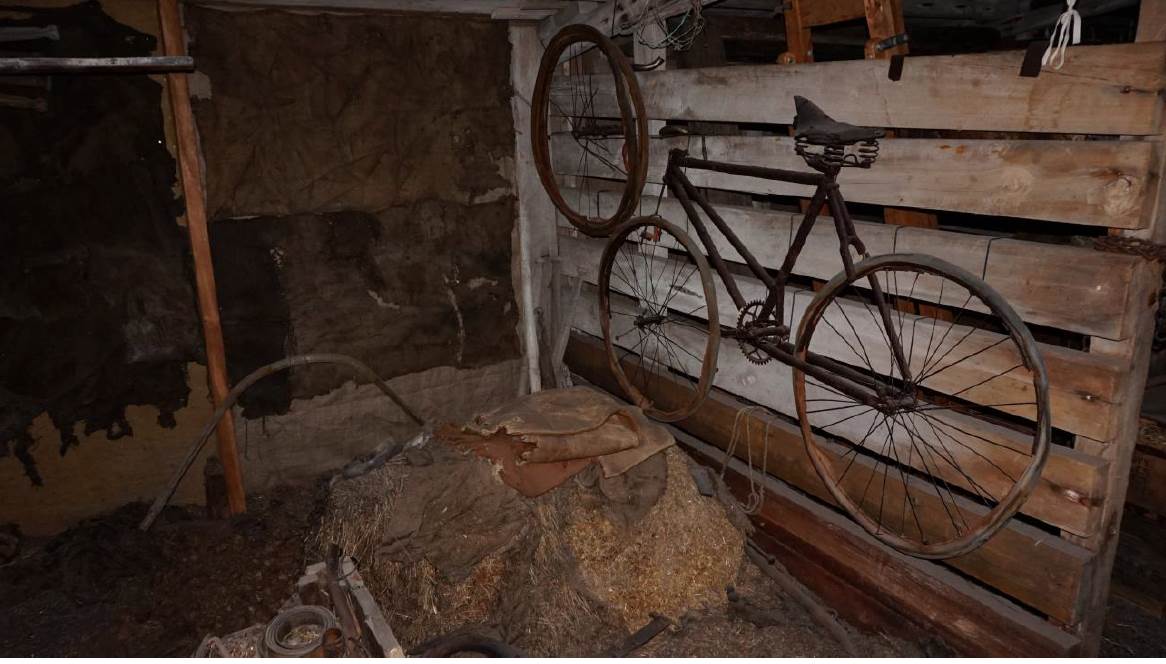
This hut was built during Robert Scott’s expedition of 1910-1913. It was later used by Ernest Shackelton’s expedition in 1915. During this expedition, their ship the Aurora broke away from its anchor (above) stranding 10 men from the party at this hut for 20 months. Luckily, the hut was well provisioned and the men were eventually rescued. When they were rescued, they left in a hurry. The hut is very well preserved. Touring around the hut is almost eerie with all the objects, pictures, and personal items strewn everywhere as if the men were still living there.

Picture3

Shovels in the “mud room” of the hut. The handles all looked hand-made and well used.

Picture29

A big stack of seal blubber. They used blubber as fuel for their stoves. Didn’t really smell even though you might think nearly 100 year old seal blubber might stink.

Picture28

Wheel barrow out in the horse stalls added to the original hut. Yes, they brought horses to Antarctica in one of the early expeditions. I don’t think it worked out too great for the horses.

Picture27

Apparently they had some time for bicycling? I can say I would be terrified to ride this bike around on the ice down here.

Picture26

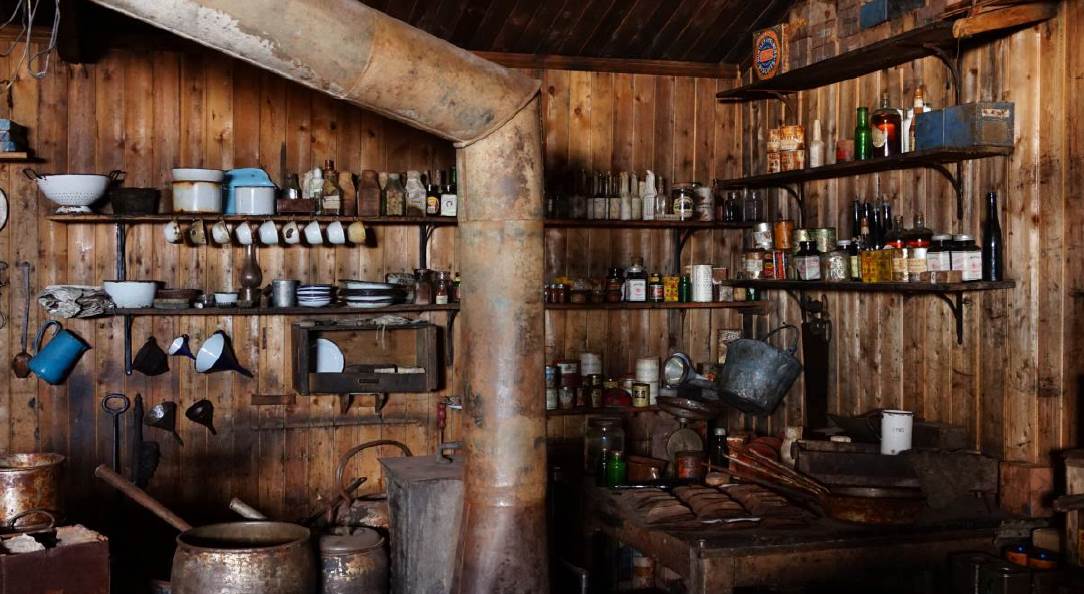
The kitchen. Lots of jars and utensils. They definitely weren’t roughing it. Actually, what I was most surprised with about this hut was how much stuff there was. There had to be hundreds of jars and trinkets. Every corner was riddled with interesting objects.

Picture25

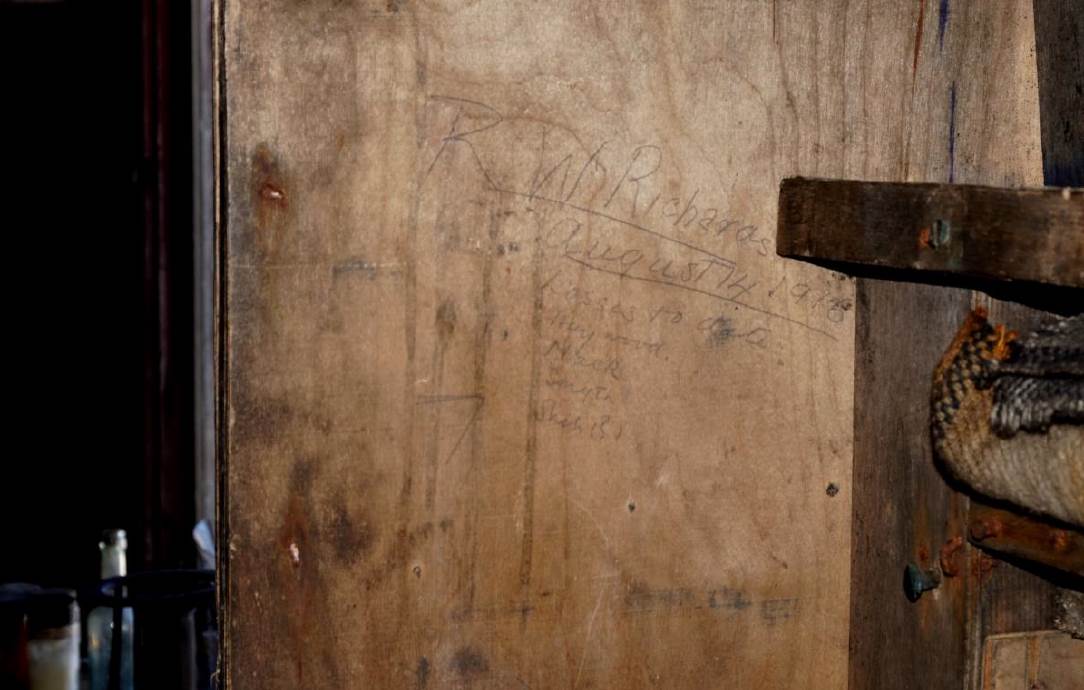
A note written on the side of R.W. Richards bed. If you can’t read the picture, it says “August 14, 1918, Losses to date: Haywood, Mack, Smith, and Shih” (I can’t really read the last name in the list)

Picture24

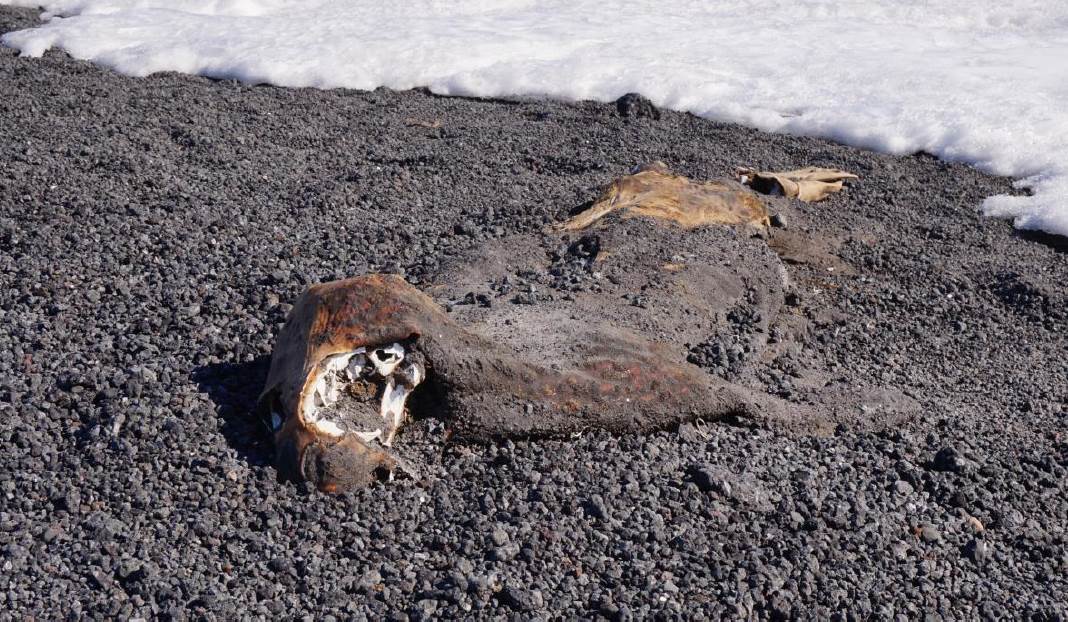
Dead, mummified seal outside the hut.

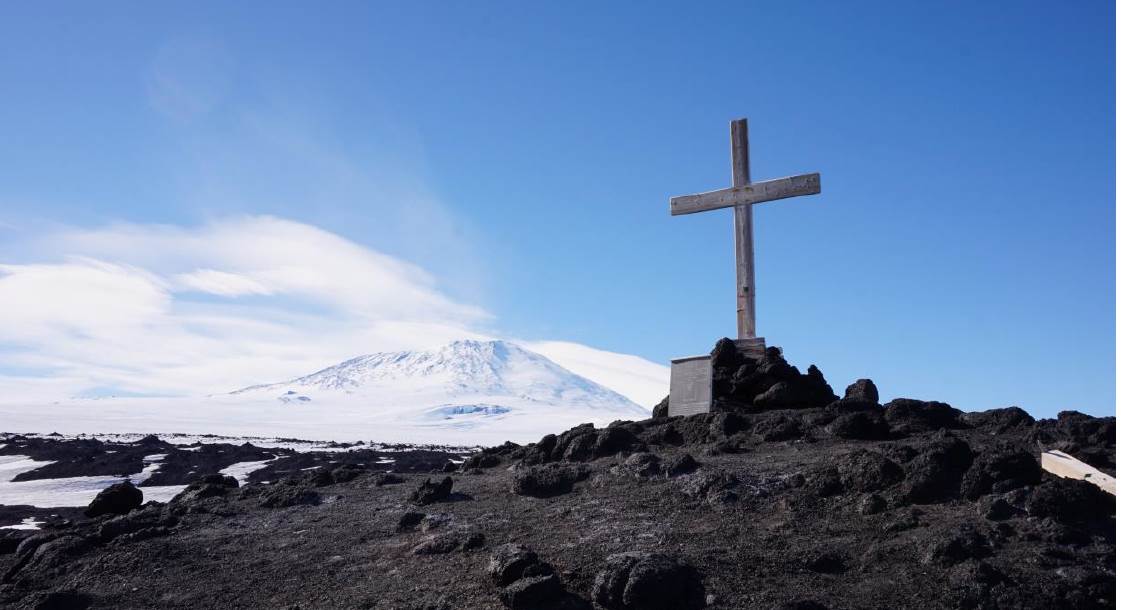
Picture23Cross with Erebus in the background. I’m sure many of the men stranded at this hut for those 20 months did a lot of praying.
Picture22

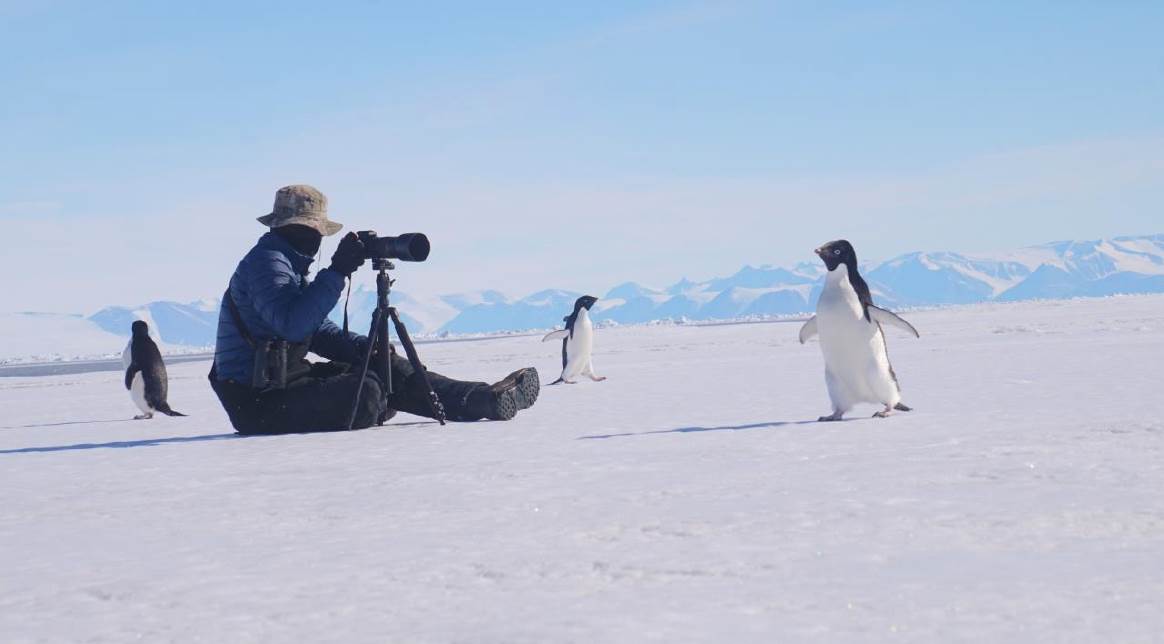
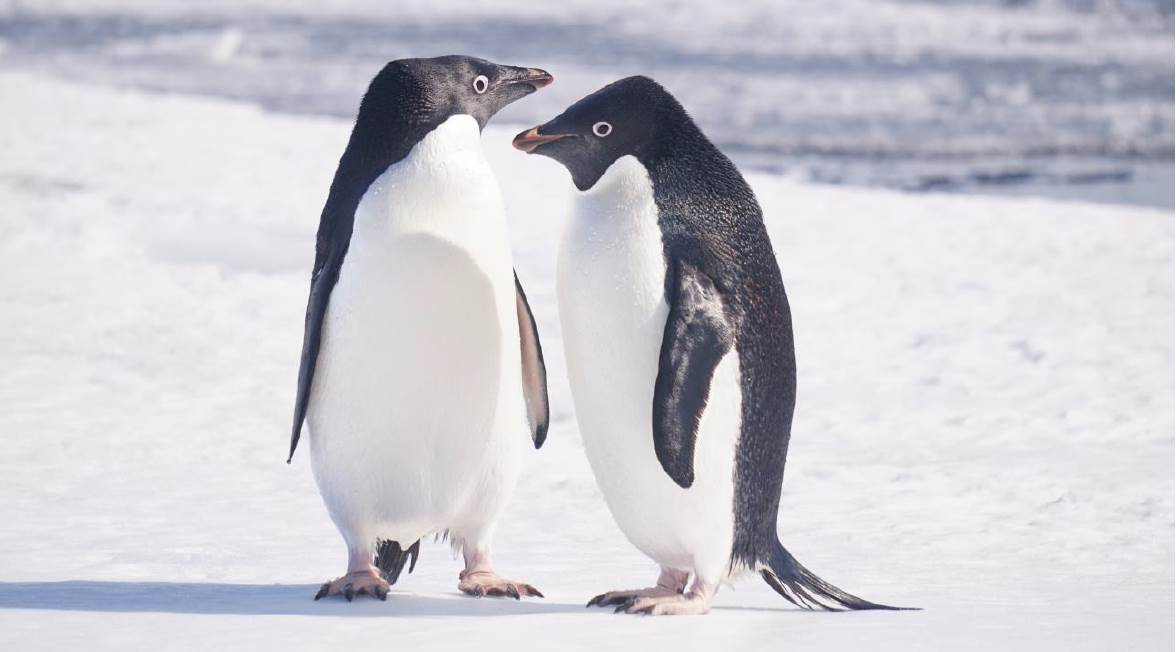
We’ve also had the chance to go to the ice edge for some wildlife viewing. Terrill taking pictures with some curious Adelies checking him out.
Picture21

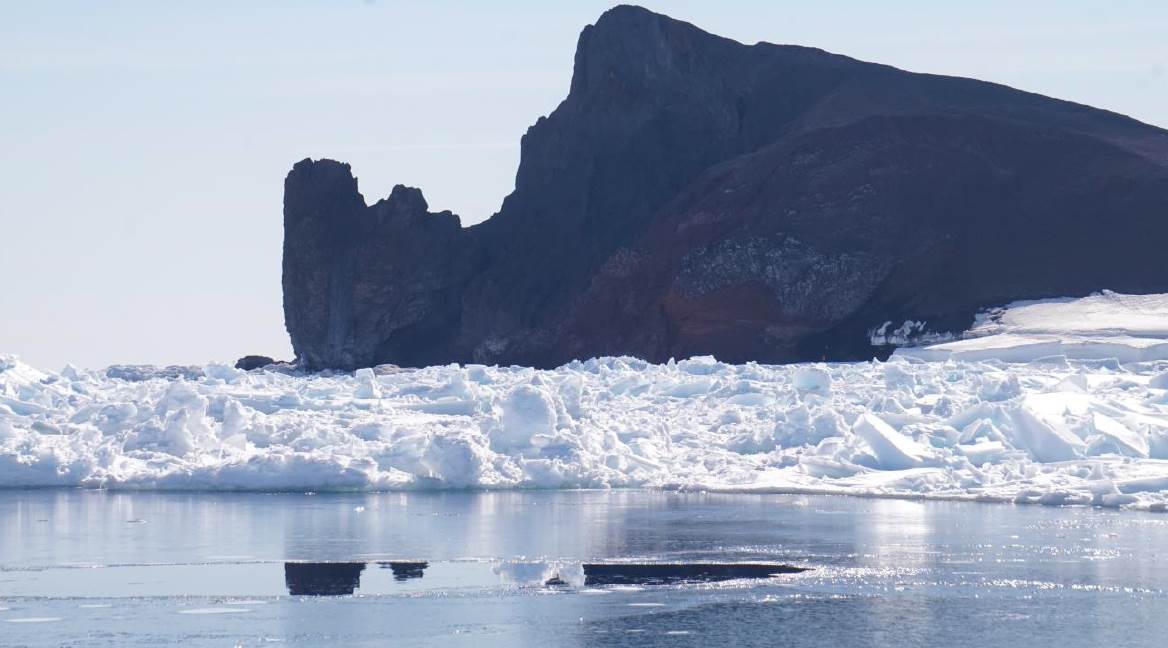
Rafted ice just beyond the ice edge. I do not know the name of the hill feature in the background. You can tell it was a beautiful day though. The open water in the picture is where penguins have been poking their heads up and swimming around.

Picture20

Adelies are funny penguins. They act like little grouchy busy-bodies. Very fun to watch.

Picture19

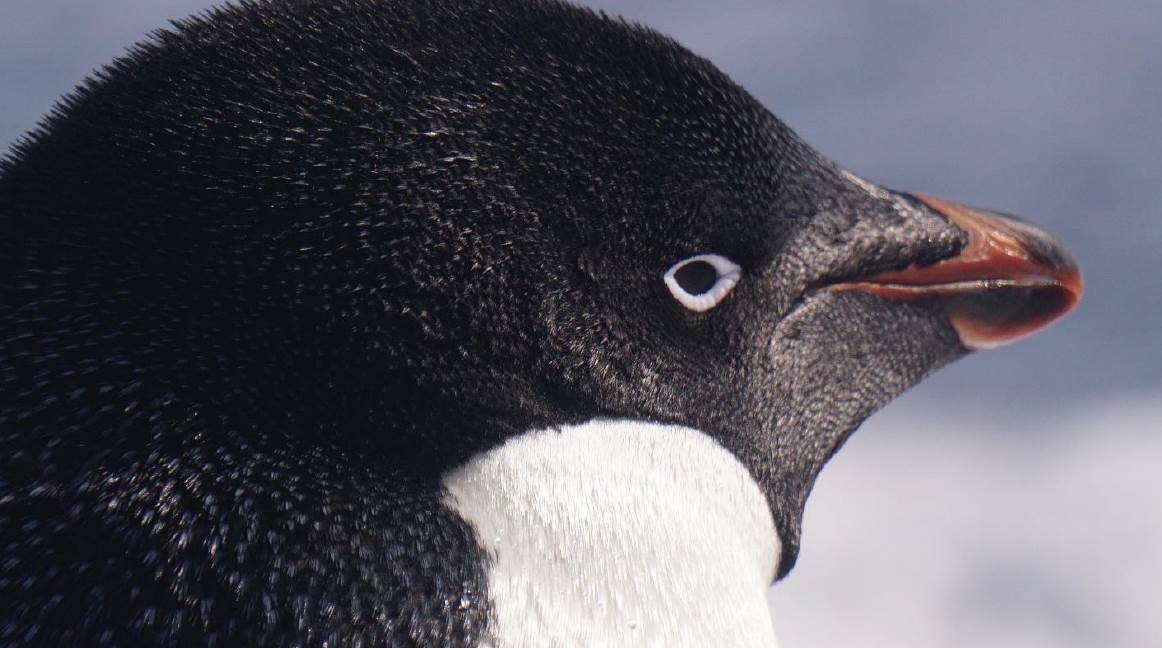
Close up head shot of an Adelie.

Picture18

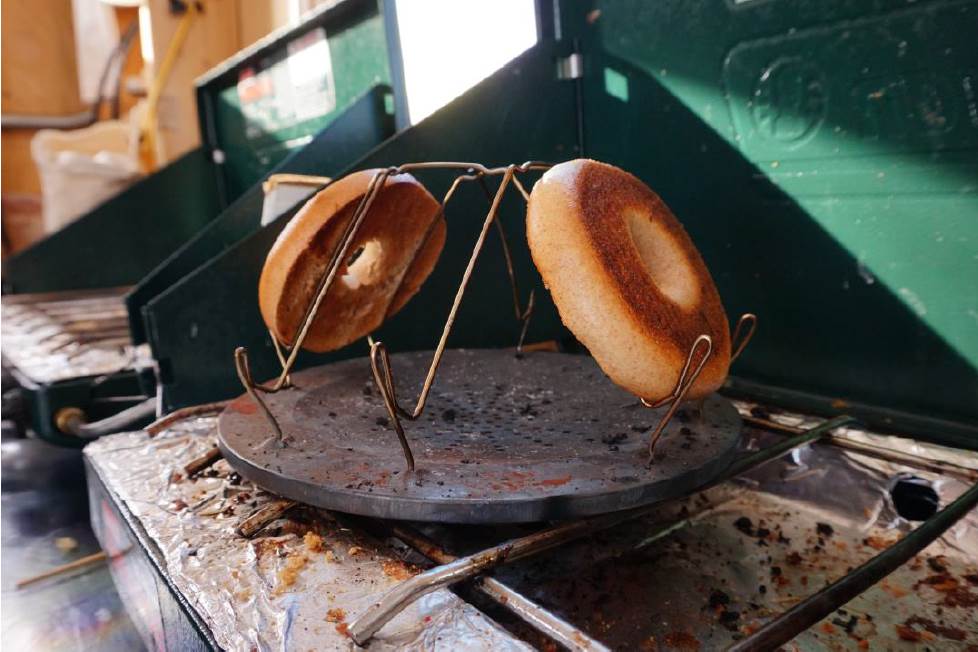
Our camp is being pulled in a day. We will live in McMurdo for the remainder of our time here (we leave on the 14th!). Here’s a couple more photos of camp life before we leave. Toasting bagels in the morning. I had never seen this type of toaster before. It works great!
Picture17

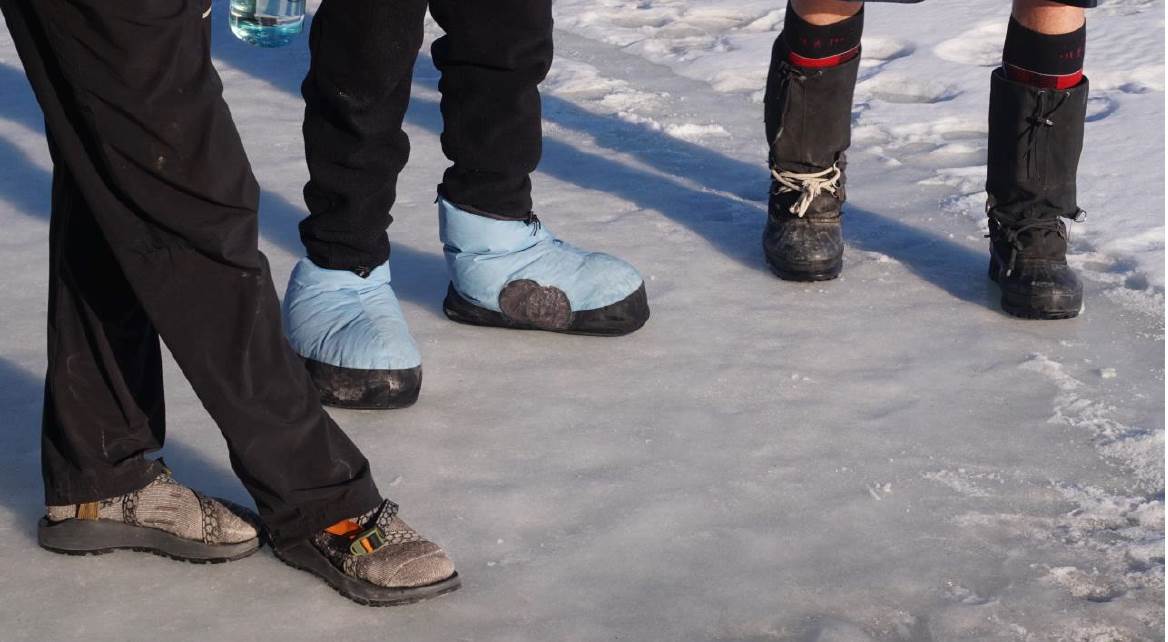
The variety of shoes we see around camp. Chacos, down booties, and Sorell boots. I usually wear tennis shoes or Haflinger clogs.

Picture16

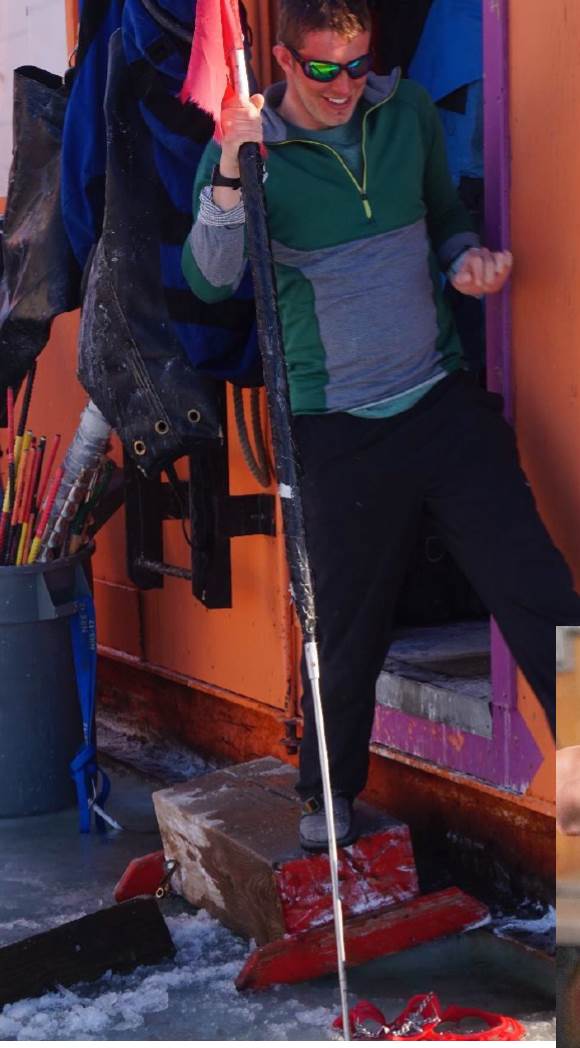
Mike’s Chacos have recently been the most appropriate footwear. Around all the doors to our huts where dirt has accumulated the ice has started melting. There are puddles one to two feet deep. This is Mike probing the ice around the step to see where he can safely go for a dry step.

Picture15

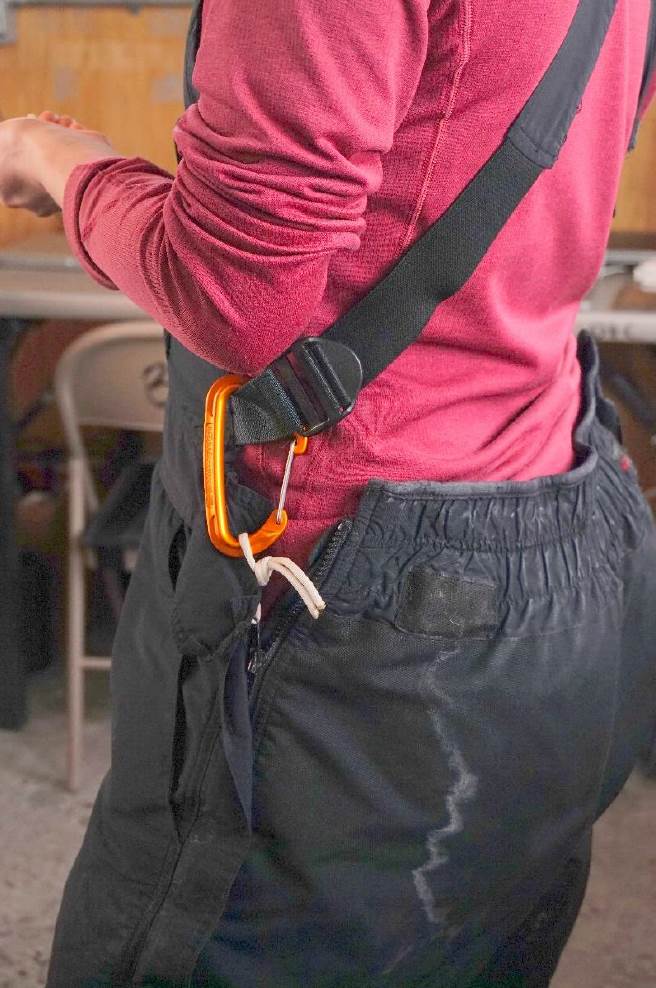
Most of our gear is pretty great, and we make do even when it isn’t. Kaitlin has had to hold her pants up with a carabiner all season. Kind of funny, I’m sure next year she’ll make sure the zippers work on her snow pants!

Well that’s all I have for this update! Hope you enjoyed! Share these with whoever might be interested and email me if you want my past and/or upcoming updates!

-Erika

This wraps up our first series for Field Diaries – Reflections of Life in the Field. 

The inspiration for these series comes from the idea that field diaries, or subjective reflections, are just as informative and useful as objective research field notes and serve as an important avenue in outreach connecting scientists and science to the public.

Please share if you were inspired and thanks for reading!

Share this:
Facebooktwitterby feather

Its an Ice Life |Field Diaries – Weddell Seal Team

The sixth post in the Antarctica: Weddell Seal Team series comes to us from Erika Nunlist.

If you haven’t yet, be sure to read the first post in this series for more background on the project and the team. You can also read the 2nd3rd4th, and 5th posts if you missed them.

If you would like to help support this project, head on over to their campaign on Experiment! They only have 4 days left to reach their goal! 

The Ice life

November 25, 2015

Life and work are still moving right along down here on the ice. We only have about three weeks left which seems absolutely crazy. I can’t believe it’s been going so fast!

First off, I had a question from someone asking ‘what is the overall objective of this project and how is it going?’ I’ve been caught up in the day-to-day activities so maybe I should take a step back for a second and briefly say a little more about the project as a whole.

The overall objective of this project is to study the long term population trends of Weddell seals. This project has been going on since the 1960’s which presents a unique opportunity to look at multi-generational data on a population of large mammalian carnivores. The oldest seal the project has had so far was 31! She was here last year but didn’t return. I believe the project has documented her with 23 pups, some of which have already had their own pups. She had her first pup in 1990, and only took 1993, 2010 and 2011 from having pups. This is an extreme case though and most of our pup moms are between 10 and 18 years old with many fewer pups to their name. Just an interesting history on an individual to help give you a sense of the information we can get out of the data this project collects!

Our short term or seasonal objective is to work hard, document all the animals in our study area, tag all the pups, and stay happy and healthy!

1a

As our pups get older, they start to molt their ‘lanugo’ fur in favor of their adult pelage. They can have some interesting and comical molt patterns. This guy with his mohawk reminds of some kid out of an inner city punk rock band.

2a

Another photo of the same pup with his mom. Notice her red tags and his yellow temp tag and blue normal tags. Both their tags allow us to document their association. You can also see the pup’s splotchy molting pattern again.

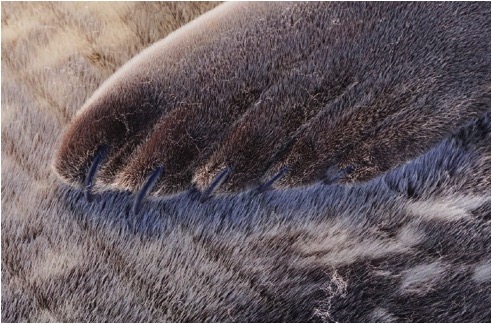
3a

One thing I was surprised with was that the seals have claws. They aren’t very sharp and kind of look like dog claws. What I’ve seen the claws used for is traction on ice and scratching themselves. The molting pups especially scratch themselves a lot. Must be pretty itchy molting all that fur!

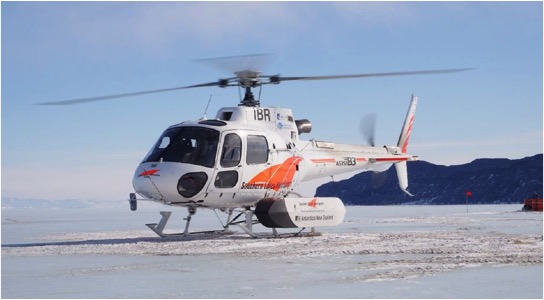
4a

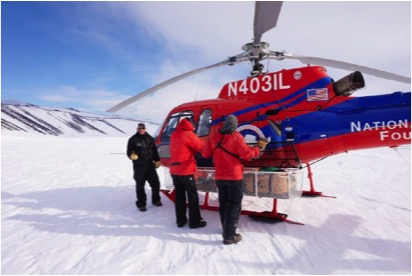
I’ve been up in a helicopter two more times recently. Both were attempts to get to an isolated seal colony. One of the flights was abandoned because there was too much wind at our destination, the second attempt was successful. More on that later. Our first flight was commissioned out to the New Zealand base, or the kiwis. This is a photo of the kiwi AStar-B2 helicopter picking us up at our camp.

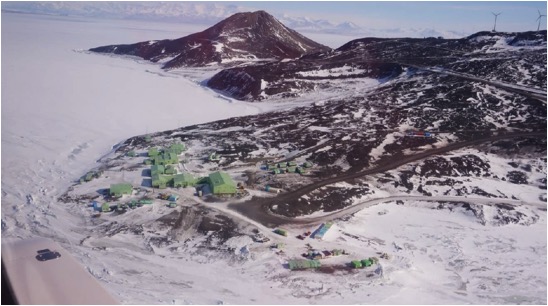
5a

We had to bail on our first flight out to White Island, where the remote seal colony is, but we did a reconnaissance flight instead. This is a shot of the kiwi base as we flew over. McMurdo is just on the other side of the wind turbines you can see in the top right.

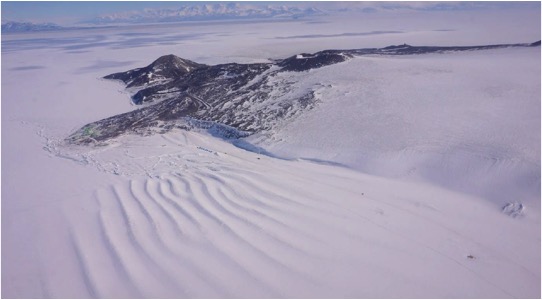
6a

Sea ice and multi-year ice can be under a lot of pressure and can have some interesting shapes. This is actually a picture of ice on the ice shelf (which is a floating glacier – very different from sea ice) under pressure just outside Scott Base in the shape of large ‘rollers’. I think they look like something you might see in a desert but formed entirely differently.

7a

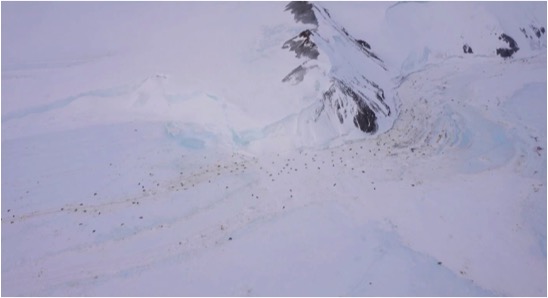
A view from the helicopter of one of our larger colonies at Hutton Cliffs. We had a lot of pups born here this year. Every other day we walk the entire colony and check every individual. This photo covers around a mile left to right.

8a

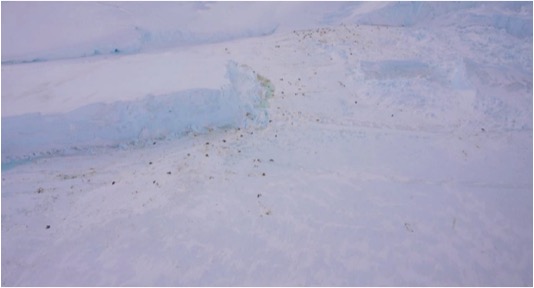
Another aerial view of one of our colonies – this one is called North Base.

9a

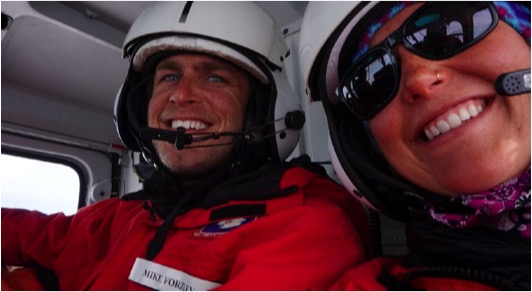
Mike and I in the kiwi helicopter.

10a

On our second attempt to White Island, we had a AStar-B2 helicopter out of McMurdo. You can see John, our pilot, enjoying himself. Often the pilots just fly and don’t get the opportunity to get out and walk around. He went with us to check out the seals. This picture also shows Mike and Terril putting our gear in the carrying cage.

11a

White Island is unique and very interesting for multiple reasons. First off, it is the most southern mammalian resident population in the world. It is also an isolated population very few individuals – last year our project saw less then 20 seals. This small population was isolated due to an event in the middle of the last century when the ice shelf broke out unusually far allowing a small subset of the seals to be trapped afterwards. The seals themselves didn’t seem to different to me, but apparently (and obviously) they are very inbred. One interesting side-effect apparently might be more female pups born than usual. No clue as to why, but an interesting observation non-the-less.

12a

I’ve had some questions on the weather we experience down here. I have to say, it really hasn’t been that bad. We had some colder, windier days to start the season off but since then we’ve had a lot of beautiful days. Recently, the temperature has been steadily climbing. Lately it’s been in the low 20’s which is warmer than places in the states! James told me it was around -10 degrees F in couple nights ago in the Centennial Valley which was about 30 degrees colder than it was here when we were talking. This is a photo of one day that the weather wasn’t good enough to work in. It was snowy, windy, and low visibility.

13a

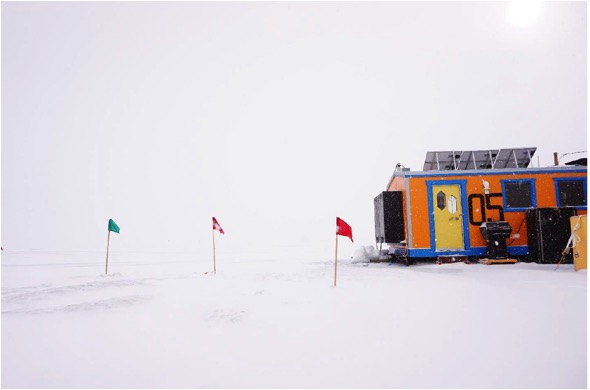
Later that same day we hadn’t been able to work, it cleared up into beautiful day. Sound like a familiar weather pattern for any of you living in Montana? We didn’t end up working that day even when it did clear up so we had some free time. Running is another thing that some of us do when we have the energy and time. This is a photo of Kaitlin running back from Little Razorback – around 1.2 miles from camp. Each of those bamboo flags are 50 meters apart for some depth perception. There’s also another out and back that adds up to 3 miles round trip. If you add both out-and-backs you have a nice 5+ mile run.

14a

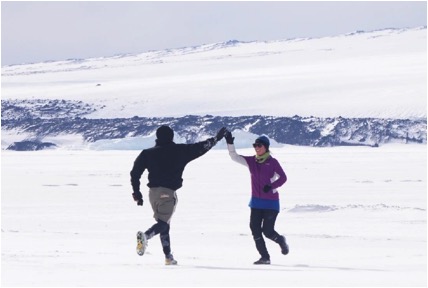
Terrill and Kaitlin ‘hi-fiving’ in front of camp. They both did the same run but in different directions. Good way to blow off some steam and enjoy Antarctica when you’re not working! Our crew plans on doing the Turkey Trot for Thanksgiving in a few days, excited for that!

15a16a

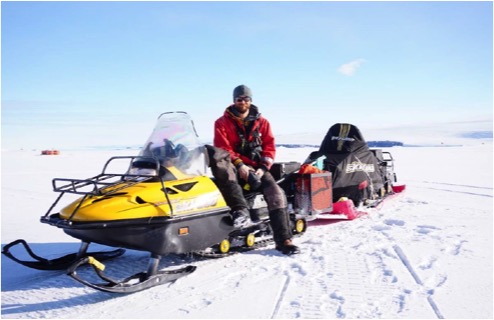
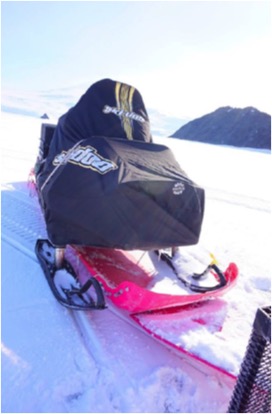
We routinely drive our sleds around on rough terrain. Because of this, we have had multiple sleds break down on us. Mostly its our suspension systems breaking because of all the ‘streugy’ (rough icy molgul features on the ice) we drive over. When a sled does break, it’s a pretty painless routine. We put the sled on one of our siglands and tow it with another sled back to McMurdo. In McMurdo we have great mechanics that seem to be able to fix anything. Usually we’ll have our sleds back in a day or two depending on their work load. These are pictures of one of the broken down sled scenario.

17a

Mike getting the gear together in the morning.

18a

Eric on a survey of another colony we call South Base.

19a

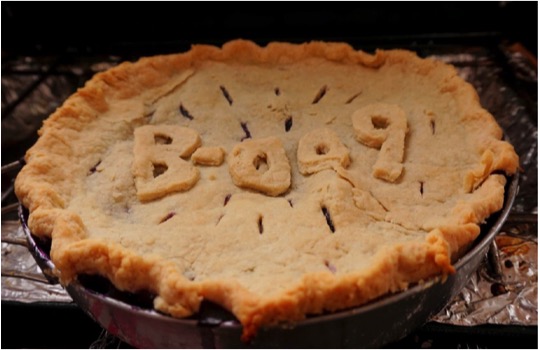
Blueberry peach pie from scratch with our event number. Pretty tasty!

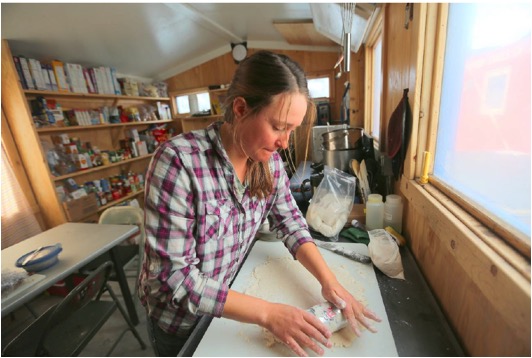
20a

No rolling pins around here, had to make due with a Coors Light can. Worked out great! Photo by Ross.

21a

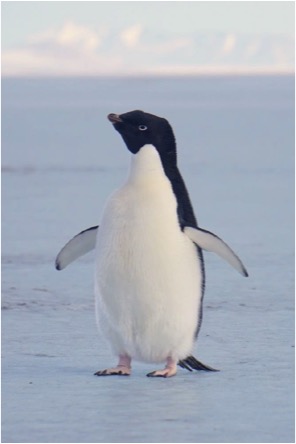
Our first adelie penguin! We haven’t had any more emperors lately, but we have had loner adelies run through camp, yes literally run. They are just as curious as the emperors but less comfortable hanging around.

22a

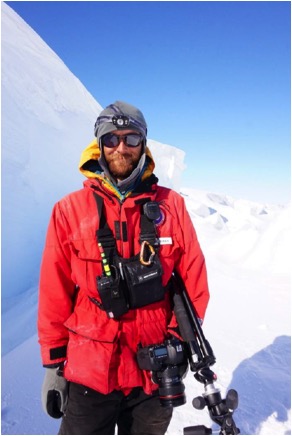
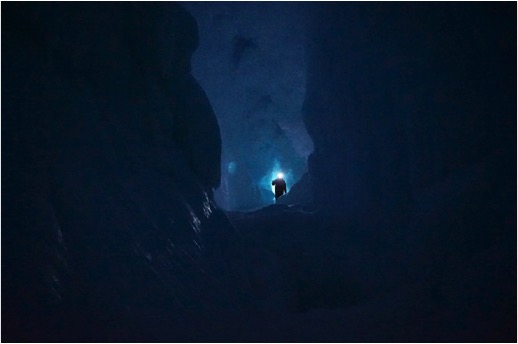
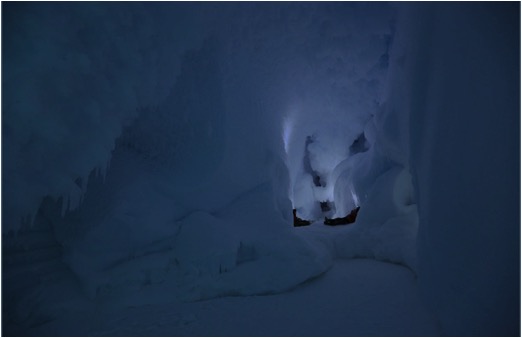
One afternoon when we finished work early we went to check out a snow cave about 10 minutes away from camp. Here’s Ross with sunglasses and a headlamp – an unusual combination around here!

23a

Mike entering the snow cave.

24a

Inside the snow cave. Photo by Ross.

25a

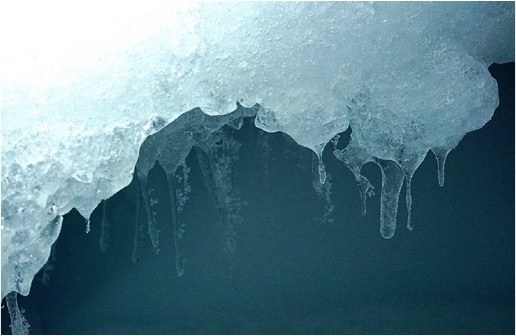
Icicles in the snow cave.

26a

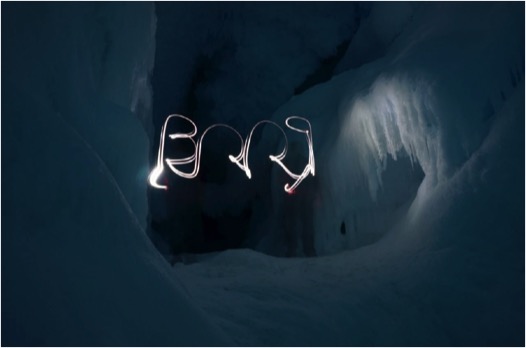
B-009. First time fooling around with light painting. Cursive by Kaitlin with a headlamp!

27a

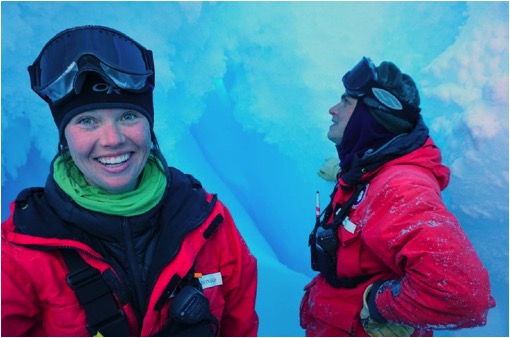
Kaitlin and Mike in another, shallower, snow cave (thus the brighter blue background).

28a

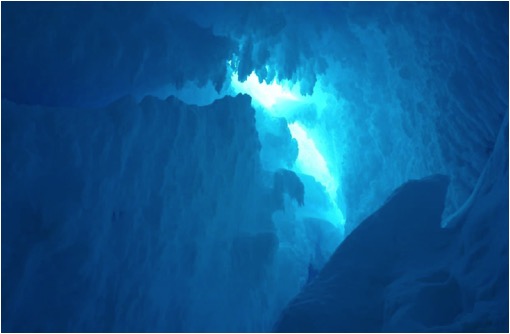
Looking up into a crevasse. So beautiful!

Hope everyone enjoyed the update!

-Erika

Thanks for reading!

Stay tuned for the seventh and last post in the series, coming tomorrow!

If you would like to help support this project, head on over to their campaign on Experiment! They only have 4 days left to reach their goal! 

Share this:
Facebooktwitterby feather
« Older posts Newer posts »

© 2026 woman scientist

Theme by Anders NorenUp ↑